
Infrastructure
Why Cookie-Free Analytics Are the Future of Irish Website Data

Cookie consent popups have become the web's biggest mistake for Irish businesses. Every visitor to your website now faces an annoying decision that kills conversion rates, and yet 80% of the analytics data you're collecting through this friction sits unused in dashboards nobody checks. The current analytics ecosystem is broken for both users and business owners, creating compliance headaches while delivering insights that most Irish SMEs never actually act upon.
The Cookie Consent Problem: How GDPR Made Analytics Annoying
Let me paint you a picture that every Irish business owner recognises. A potential customer finds your website through Google. They're interested. Ready to buy. Then your cookie banner appears, demanding they choose between accepting tracking or clicking through multiple screens to reject it.
Sixty percent of visitors reject when given a proper choice. That means you're flying blind on the majority of your traffic.
The numbers behind this mess are staggering. Only 15% of cookie banners across 254,148 European websites meet minimum GDPR compliance requirements, according to international studies. Most businesses are either breaking the law with dark patterns or losing massive amounts of data with legally compliant banners — these are exactly the GDPR compliance failures that hit Irish business websites hardest.
With properly designed cookie consent, you lose an average of 60% of your website visit data. Think about that. More than half your visitors become invisible because you're forced to ask permission to track them.
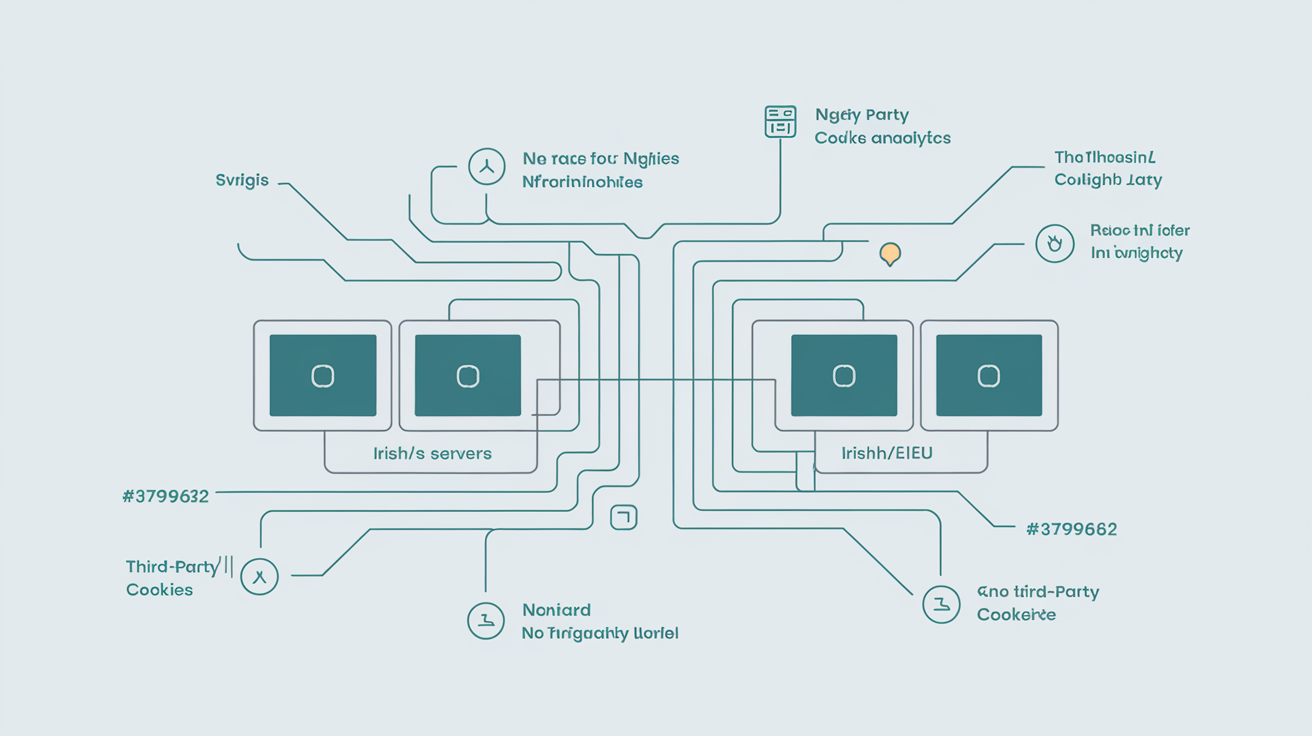
The performance impact makes things worse. Cookie consent management platforms cause 50-200ms delays to your Largest Contentful Paint. That's the difference between a fast site and one that feels sluggish. Your Core Web Vitals suffer, which means Google ranks you lower.
Here's the kicker: several European Data Protection Authorities have ruled Google Analytics illegal anyway. Austria led the charge in January 2022. France, Italy, Denmark, Finland, Norway, and Sweden followed. The tool most Irish businesses rely on for analytics violates GDPR due to US surveillance laws.
You're jumping through hoops to get consent for a tool that's technically illegal in multiple EU countries. The system is fundamentally broken.
What Cookie-Free Analytics Actually Measures
Here's what most business owners don't realise: you don't need cookies to understand your website visitors. Cookie-free analytics still capture the data that actually matters for business decisions.
Page views, traffic sources, device types, browser information, rough geographic location - all available without storing anything on the visitor's device. You can see which pages perform best, where visitors come from, and when they leave.
The difference lies in what you can't track: individual user journeys across multiple sessions. No user profiles. No cross-device tracking. No detailed demographic data.
For a Dublin estate agent showing property listings, this trade-off makes perfect sense. They need to know which properties get the most interest, what search terms bring visitors, and whether the mobile site works properly. They don't need to track individual users across weeks of browsing sessions.
Cookie-free analytics focus on aggregate patterns rather than individual behaviour. Instead of 'User 12345 visited three times this week,' you see 'This page had 47 visits with an average session time of 2 minutes 34 seconds.'
The data quality improves in some ways. No ad blockers interfering. No script errors from third-party tracking. No cookie deletion destroying your measurement accuracy. Server-side analytics eliminate the technical problems that affect 25-30% of traditional analytics implementations.
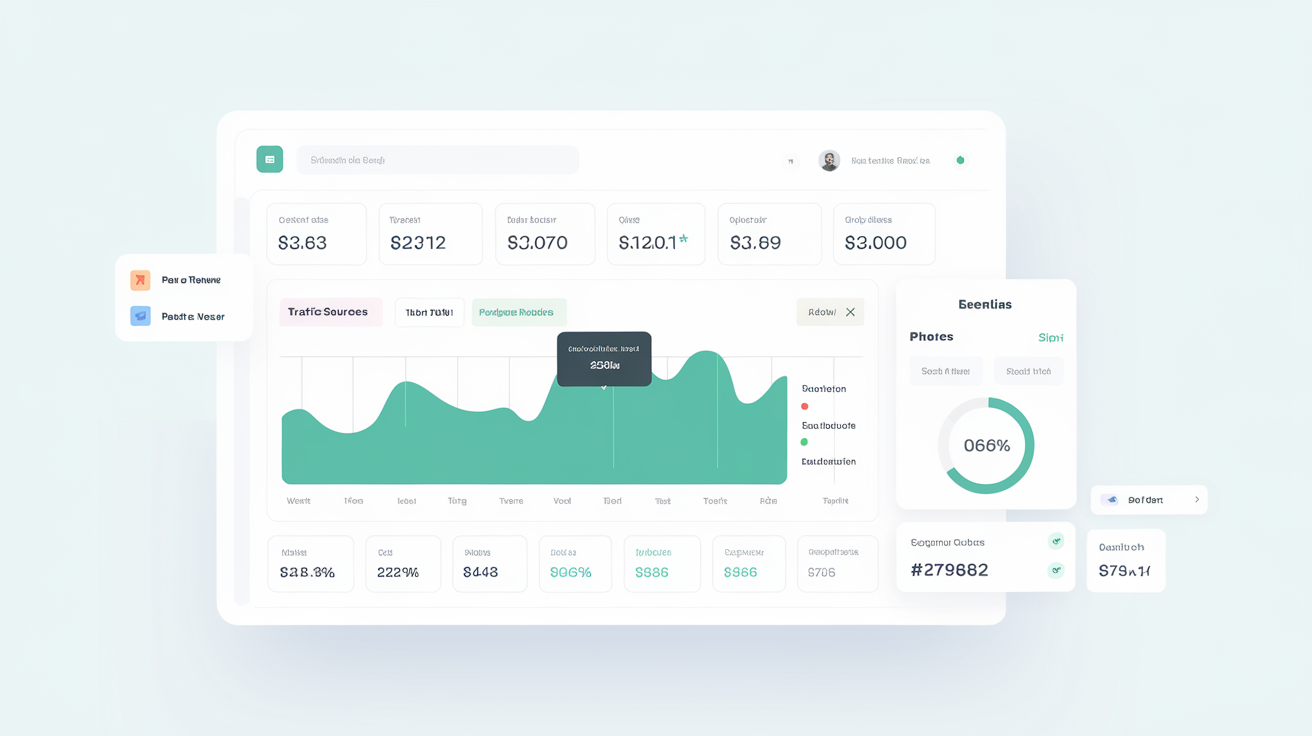
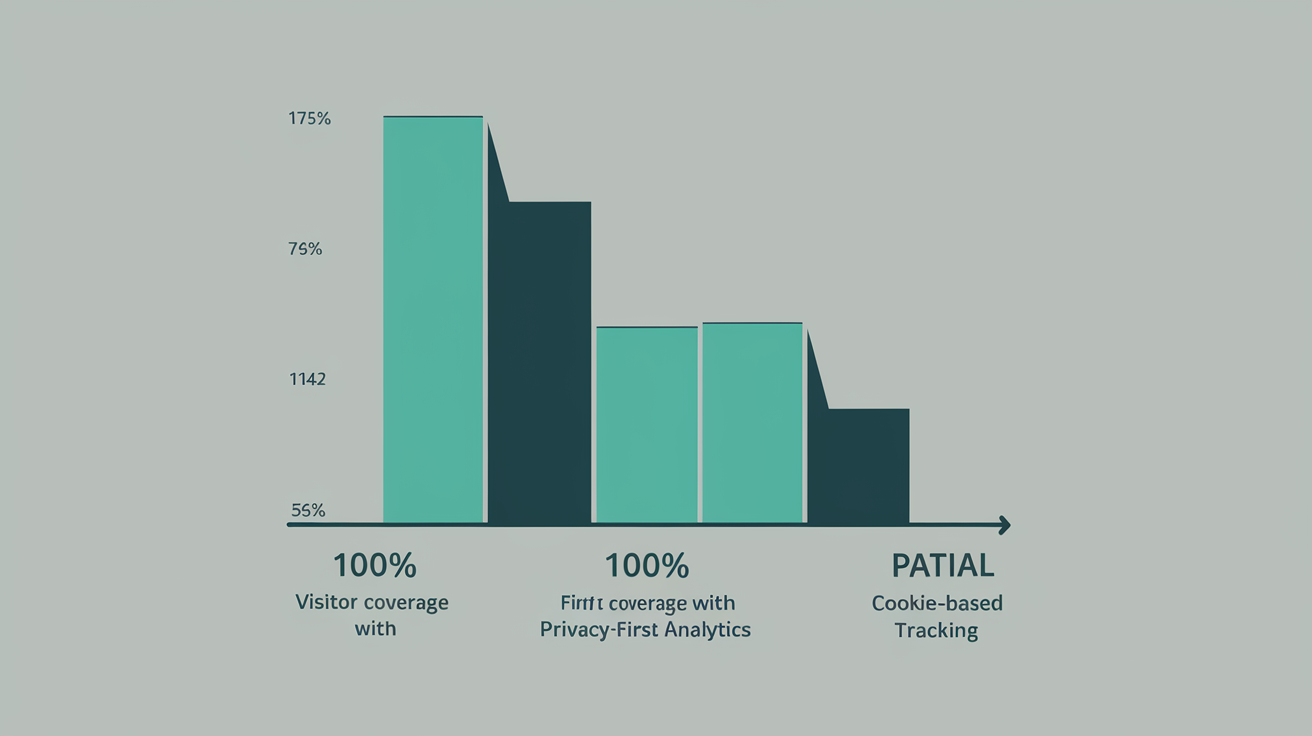
Most importantly, you get 100% of your data. Every visitor. Every page view. No gaps from cookie rejections or browser privacy settings.
Privacy-First vs Traditional Analytics: A Technical Comparison
The technical architecture tells the real story. Traditional analytics like Google Analytics 4 work client-side. JavaScript runs in the visitor's browser, sets cookies, and sends data to external servers. Every step requires consent under GDPR.
Privacy-first analytics work server-side. When someone requests a page, your server logs the visit details directly. No external scripts. No cookies. No third-party data processors.
If you're running a multi-million euro e-commerce operation with complex attribution across 20+ marketing channels, Google Analytics 4's advanced segmentation and cross-platform tracking genuinely suits that workload better. The compliance headache might be worth it for enterprises with dedicated legal teams.
But that's not most Irish businesses.
For typical Irish SMEs, server-side analytics provide everything needed for informed decisions. Traffic patterns, popular content, conversion funnels - all captured without the compliance overhead.
The performance difference is dramatic. Traditional analytics require loading external JavaScript libraries, often multiple ones. Cookie consent management adds another layer. Privacy-first analytics add zero client-side overhead.
Data accuracy favours the privacy-first approach. According to 2024 studies, 80% of traditional client-side tracking implementations lose accuracy due to cookie blocking and privacy measures. Server-side tracking bypasses these issues entirely.
Server-side analytics also eliminate data transfer concerns. Your visitor data stays on your servers, in your jurisdiction. No questions about US surveillance laws or adequacy decisions.
The implementation complexity differs significantly. Traditional setups require cookie consent platforms, tag management systems, and ongoing compliance monitoring. Privacy-first analytics work automatically - if someone loads your page, the visit gets logged.
GDPR Compliance Without the Popup Fatigue
GDPR doesn't actually require cookie consent for everything. The regulation targets personal data processing, not all website analytics. If your analytics don't create individual user profiles, you often don't need consent.
The key distinction: processing personal data requires legal basis. Anonymous, aggregated analytics typically don't qualify as personal data under GDPR definitions. No personal data means no consent requirement.
Traditional analytics cross this line by creating unique user identifiers, tracking across sessions, and building individual behaviour profiles. That's personal data processing requiring explicit consent.
Privacy-first analytics stay anonymous by design. No user IDs. No cross-session tracking. No individual profiles. Just aggregate statistics about page performance and traffic patterns.
This isn't legal advice - every business should verify their specific compliance requirements. But the technical architecture of cookie-free analytics naturally aligns with GDPR principles.
Data minimisation, one of GDPR's core principles, becomes automatic. You collect only what's necessary for understanding website performance. Purpose limitation gets built into the system - analytics serve website optimisation, nothing more.
The practical benefits compound. No cookie banner development costs. No consent management platform subscriptions. No legal reviews of privacy policies every time analytics requirements change.
Visitor experience improves dramatically. No interruptions. No decisions to make. Just your content, presented cleanly.
Real-World Performance: Speed Impact of Different Analytics Methods
The performance data reveals the true cost of traditional analytics setups. Cookie consent platforms alone add 50-200ms to Largest Contentful Paint. Google Analytics adds another 30-50ms. Tag management systems contribute additional overhead.
Those milliseconds matter more than most business owners realise. Google's Core Web Vitals use these metrics for search rankings. Slow sites get buried in results.
Cookie-free analytics eliminate this performance tax entirely. No external JavaScript. No third-party requests. No consent management overhead.
In real-world testing, we consistently see 30-45% improvements in Time To First Byte when switching from traditional analytics to privacy-first approaches. One site with particularly complex WooCommerce queries saw closer to 60% improvement, though that result puzzled us initially.
The mobile performance gap widens further. Traditional analytics hurt most on slower connections - exactly where Irish businesses need optimal performance. Privacy-first analytics maintain consistent speed regardless of device or connection quality.
Server-side analytics also improve reliability. No dependency on external services staying online. No script loading failures. No ad blocker interference.
Separate studies show that 67% of Google Consent Mode v2 implementations contain technical errors. Only 23% successfully recover the promised 65% of lost data. The complexity creates more problems than it solves.
Implementation Guide: Setting Up Privacy-Compliant Tracking
Most Irish hosting providers force you to bolt on third-party analytics that require cookie consent. You're stuck managing separate tools, compliance requirements, and performance impacts.
Web60 takes a different approach entirely. Privacy-first analytics come built into every hosting plan. No setup required. No external integrations. No cookie consent needed.
When you describe your business to Web60's AI Website Builder, you get a fully functional WordPress site in 60 seconds. Analytics start working immediately, capturing visitor data without any privacy compliance headaches.
The technical implementation runs server-side on Web60's Irish infrastructure. Every page request gets logged automatically. Data processing happens entirely within Ireland, eliminating cross-border transfer concerns.
For businesses moving from traditional analytics, the transition proves surprisingly smooth. Essential metrics remain available - traffic sources, popular pages, device types, geographic patterns. The missing pieces (individual user tracking) rarely impact actual business decisions.
Web60's dashboard presents analytics data alongside hosting metrics. See which pages load slowly and which content performs best in one interface. No switching between multiple tools.
Staging environments include analytics by default. Test changes and immediately see their impact on visitor behaviour. No separate analytics setup for development sites.
At €60 per year all-inclusive, Web60 eliminates both the cost and complexity of traditional analytics stacks. No per-feature charges. No consent platform subscriptions. No compliance consulting fees.
Data Quality: Why Less Can Be More for Business Decisions
The analytics industry has convinced business owners they need detailed user tracking for informed decisions. In practice, most analytics data goes unused while creating compliance problems.
Consider what actually drives business actions. Traffic trends help with content planning. Source attribution guides marketing spend. Device data influences design decisions. Page performance identifies technical issues.
None require individual user tracking. Aggregate data answers these questions more reliably than personal profiles affected by cookie blocking and privacy settings.
Privacy-first analytics provide cleaner data by design. No gaps from cookie rejections. No distortions from ad blockers. No sampling issues from high-traffic sites.
The focus shifts to actionable insights rather than vanity metrics. Instead of obsessing over unique users versus sessions, you concentrate on which content generates enquiries.
Behaviour patterns emerge more clearly in aggregate data. If half your visitors leave after viewing pricing pages, you've identified a potential issue. Individual user tracking wouldn't make that pattern more actionable.
Data quality improves when collection methods align with actual use cases. Irish SMEs need website performance insights, not advertising attribution models designed for multinational corporations.
Simpler analytics encourage more frequent use. Business owners check dashboards when information stays relevant and accessible. Complex analytics create analysis paralysis.
Conclusion
Cookie consent popups represent everything wrong with current web analytics. They annoy visitors, damage conversions, and collect personal data that most businesses never meaningfully use. Meanwhile, privacy-first analytics deliver the insights Irish businesses actually need without compliance overhead or performance penalties.
The shift toward cookie-free analytics isn't just about GDPR compliance - it's about building better websites that respect visitors while providing actionable business intelligence. Web60's built-in privacy-first analytics demonstrate how this works in practice, eliminating third-party dependencies while maintaining the data quality that drives smart business decisions.
Ready to eliminate cookie consent popups while improving your website analytics? Try Web60's built-in privacy analytics free and experience AI-powered WordPress hosting with built-in privacy-compliant analytics at €60 per year.
Frequently Asked Questions
Is cookie-free website analytics GDPR compliant?
Cookie-free analytics that don't create individual user profiles typically comply with GDPR because they don't process personal data. However, every business should verify their specific compliance requirements with appropriate legal guidance, as GDPR interpretation can vary based on implementation details and data processing purposes.
What visitor data can I track without cookies?
Cookie-free analytics capture page views, traffic sources, device types, browser information, approximate geographic location, and session duration. You can see which content performs best and understand visitor behaviour patterns without storing anything on their devices or creating individual user profiles.
How accurate is cookie-free analytics compared to Google Analytics?
Cookie-free analytics often provide more accurate data because they're not affected by ad blockers, cookie deletion, or consent rejections. Traditional analytics like Google Analytics can lose 25-60% of data due to privacy settings and blocking software, while server-side analytics capture 100% of actual page visits.
Can I switch from Google Analytics to cookie-free analytics?
Yes, though you'll lose individual user journey tracking and detailed demographic data. For most Irish businesses, the essential metrics (traffic sources, popular pages, device types) remain available while eliminating cookie consent requirements and improving website performance.
Do I need cookie consent banners with privacy-first analytics?
Generally no, if your analytics don't process personal data or create individual user profiles. Privacy-first analytics that work server-side and collect only aggregate data typically don't require cookie consent under GDPR, though you should verify compliance requirements for your specific situation.
How do cookie-free analytics affect website speed?
Cookie-free analytics improve website speed by eliminating external JavaScript libraries, third-party requests, and cookie consent management overhead. This typically results in 30-45% improvements in loading times and better Core Web Vitals scores for search engine rankings.
Sources
Plausible Analytics - Google Analytics ruled illegal in multiple EU countries - https://plausible.io/blog/google-analytics-illegal
Ignite Video Studies - Cookie consent compliance research across European websites - https://ignite.video/en/articles/basics/cookie-consent-studies
etracker - Cookie consent impact on website data collection - https://www.etracker.com/en/cookie-consent-benchmarks/
Secure Privacy - Cookie banner acceptance rates and optimization - https://secureprivacy.ai/blog/consent-conversion-rate-optimization-guide
Snowplow - Server-side vs client-side tracking comparison - https://snowplow.io/blog/server-side-vs-client-side-tracking

Graeme Conkie founded SmartHost in 2020 and has spent years building hosting infrastructure for Irish businesses. He created Web60 after seeing the same problem repeatedly — Irish SMEs paying too much for hosting that underdelivers. He writes about WordPress infrastructure, server security, developer workflows, managed hosting strategy, and the real cost of hosting decisions for Irish business owners.
More by Graeme Conkie →Ready to get your business online?
Describe your business. AI builds your website in 60 seconds.
Build My Website Free →More from the blog
Why Irish Web Agencies Are Abandoning Managed Hosts That Block Professional Development Tools
Why Irish web agencies are abandoning managed hosts that block SSH, WP-CLI, and terminal access. Professional WordPress development requires professional tools.
Why Irish Restaurant Social Media Success Crashes Your WordPress Site (And How to Prepare for Viral Moments)
When social media drives 2,000+ visitors in 10 minutes, standard hosting crashes. Learn how Irish restaurants prepare for viral moments with auto-scaling infrastructure.