

Comparisons
Irish-Hosted Websites Load Faster for Irish Customers: Here Is Why That Matters

Most business owners never ask where their website physically lives. They sign up for hosting, get a login, and assume the technical side is handled. But here is the thing: the physical location of your web server affects how fast your site loads for your customers, and for most Irish businesses, that server is nowhere near Ireland.
This is not a minor technical detail. It is the single biggest performance variable that most independent retailers, professional services firms, and local traders never think to check. The distance between your server and your customer is measured in milliseconds, and those milliseconds have a direct, measurable impact on whether people stay on your site or leave.
The Physics You Cannot Argue With
Data does not teleport. It travels through fibre optic cables at roughly 200,000 kilometres per second, which sounds impossibly fast until you consider the distances involved. According to both KeyCDN's latency research and Cloudflare's CDN performance documentation, every 1,000 kilometres of physical distance between server and visitor adds approximately 10 to 12 milliseconds of round-trip latency.
Ireland is roughly 500 kilometres end to end. If your server is in Dublin and your customer is in Cork, the geographic latency is negligible. A few milliseconds at most.
Now consider the alternative. Dublin to a typical US East Coast data centre is roughly 5,000 kilometres. That is 50 to 60 milliseconds of latency each way, or 100 to 120 milliseconds round trip, before your server even begins processing the request. Before it looks up the page. Before it queries the database. Before it sends a single byte of your homepage back to the browser.
That 100 to 120 milliseconds is dead time. Wasted. Built into every single page load, every single time an Irish customer visits your site.
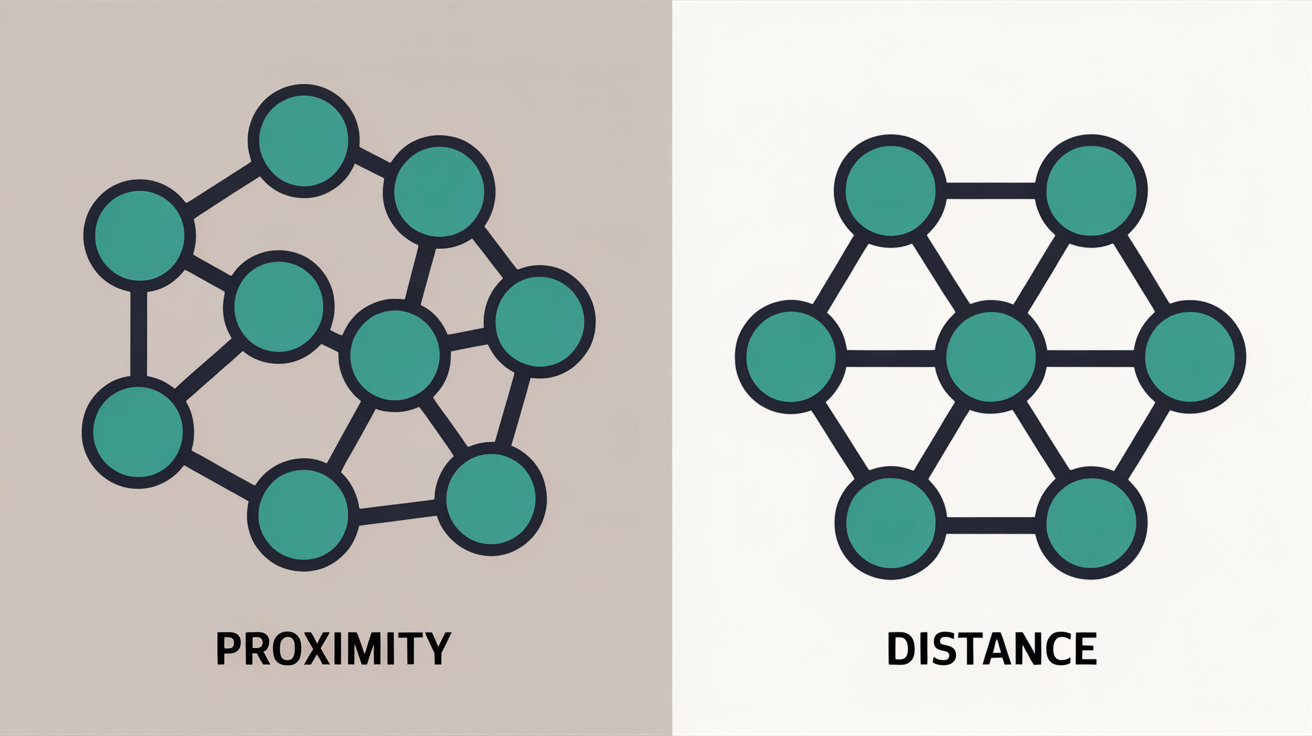
What 5,000 Kilometres Costs Your Business
A hundred milliseconds might sound trivial. It is not.
Deloitte's "Milliseconds Make Millions" study, commissioned by Google and published through Deloitte Ireland, found that a 0.1 second improvement in mobile site speed produced measurable business results: retail conversions increased by somewhere in the region of 8% to 9%, and lead generation sites saw bounce rates improve by a similar margin. That is a tenth of a second. The kind of difference that server location alone can account for.
Google's own research with SOASTA showed that the probability of a visitor bouncing increases by roughly a third when page load time goes from one second to three seconds. Push it to five seconds and the bounce probability nearly doubles. These are not edge cases. This is the difference between a customer who sees your prices and a customer who gives up and tries the next result in Google.
I will be honest: I spent the first few years of SmartHost's existence not giving server location the weight it deserved. We were focused on stack optimisation, caching layers, PHP performance. All of which matter. But when we started benchmarking Irish sites hosted on US infrastructure against the same sites moved to our Irish data centres, the TTFB improvements were consistently in the 30% to 45% range. For some WooCommerce sites with heavier database queries, we saw closer to 55%. The geographic latency was the largest single variable, and we had been treating it as a given rather than a problem to solve.
If you want to understand the full picture of what makes a WordPress site fast beyond just server location, our complete WordPress performance guide for Irish businesses covers every layer of the stack.
TTFB, Core Web Vitals, and What Google Thinks About Your Hosting
TTFB, or Time to First Byte, measures the gap between your visitor requesting a page and receiving the very first byte of the response. As Google's web.dev documentation explains, it is not technically a Core Web Vital itself, but it directly affects Largest Contentful Paint (LCP), which is a Core Web Vital and a confirmed ranking factor.
Google considers a TTFB under 800 milliseconds acceptable, while Lighthouse flags anything over 600 milliseconds. The web.dev performance team has noted that roughly half of a one-second mobile page load budget gets consumed by network latency overhead alone.
Here is the "so what" for your business. If your server is 5,000 kilometres away and your TTFB starts with 100 to 120 milliseconds of pure geographic penalty, you are burning through your performance budget before your hosting stack even begins to respond. A fast server in Virginia is still slower for an Irish customer than a mediocre server in Dublin, simply because of physics.
That matters for Google rankings. It matters for customer experience. And it matters most during the moments when your site traffic actually spikes, because latency compounds under load.
Irish Hosting vs Global Hosting: What the Numbers Show
| Factor | Irish-Hosted (e.g. Dublin data centre) | US-Hosted (e.g. Virginia data centre) | EU-Hosted (e.g. Frankfurt) |
|---|---|---|---|
| Geographic latency to Irish visitor | 1 to 5 ms | 100 to 120 ms | 25 to 40 ms |
| TTFB impact | Minimal geographic penalty | Significant, 100 ms+ added to every request | Moderate, 25 to 40 ms added |
| GDPR data residency | Data stays in Ireland, no transfer mechanisms needed | Requires Standard Contractual Clauses or adequacy decision | Within EU, simpler but data leaves Ireland |
| Support timezone | Irish business hours, same timezone | US timezone, 5 to 8 hour offset | CET, 1 hour offset |
| Data sovereignty | Full Irish jurisdiction | US jurisdiction, subject to CLOUD Act | EU jurisdiction, varies by country |
We covered the Ireland-versus-UK comparison specifically in our analysis of Irish and UK data centre performance, which showed a meaningful gap even across the Irish Sea. The transatlantic difference is substantially larger.

The CDN Argument (and Where It Falls Short)
The obvious counterargument is CDNs, content delivery networks that cache your static files on servers around the world. APNIC's research found that CDN caching reduced latency by an average of roughly 83% compared to direct origin requests in their benchmarks. That is significant, and for global businesses it is the right approach.
Here is where it falls short for most Irish businesses.
A CDN caches static assets: images, CSS files, JavaScript bundles. It does not cache dynamic content. Your WooCommerce product pages, your booking form, your customer login, your contact form submissions, anything that requires a database query or server-side processing still goes back to the origin server. And if that origin server is in Virginia, every dynamic request from an Irish customer carries the full 100 to 120 millisecond geographic penalty.
If you are a genuinely global business serving customers across 15 or 20 countries in roughly equal measure, a CDN-first approach on globally distributed infrastructure makes more sense than pinning everything to one Irish data centre. Enterprise managed hosting providers that operate multi-region infrastructure genuinely serve that workload better. But that is not most Irish businesses. A Waterford manufacturer selling primarily to Irish and UK trade customers does not need edge nodes in Singapore. They need a fast origin server close to their actual customers.
For most local firms, the combination that works is simple: host the origin server in Ireland, serve Irish and nearby customers with minimal latency, and skip the CDN complexity entirely.
GDPR, Data Sovereignty, and the Compliance Shortcut
The Irish Data Protection Commission requires organisations to implement data protection by design and by default. GDPR does not technically mandate that your data stays in Ireland, or even in the EU. But transferring personal data outside the EU or EEA triggers a set of legal requirements, Standard Contractual Clauses, transfer impact assessments, adequacy decisions, that most small business owners neither understand nor want to deal with.
Hosting in Ireland sidesteps the entire question. Your customer data, your analytics, your form submissions, your order records all stay on Irish soil, under Irish jurisdiction, supervised by the Irish DPC. No transfer mechanisms to negotiate. No cross-border data flows to document.
Ireland signed the Declaration for European Digital Sovereignty in November 2025, and the EU's Cloud Sovereignty Framework published in October 2025 set out eight sovereignty objectives for cloud procurement across the bloc. The direction of travel is clear: data sovereignty is becoming more important, not less. Hosting locally now means you are ahead of the curve rather than scrambling to comply later.
One thing worth being honest about: GDPR compliance is not just about where your server lives. You still need a privacy policy, you still need to handle subject access requests properly, and you still need to ensure any third-party services you use (payment processors, email marketing tools) also comply. Irish hosting eliminates the data transfer headache, which is substantial, but it does not eliminate every obligation. Check with your solicitor if you are unsure about the specifics.
What This Actually Means for Your Website
Consider this scenario, because it plays out more often than most business owners realise. A potential customer searches for your service on their phone during a lunch break. Google returns your site among the top results. They tap the link. The page takes three seconds to load because your server is processing the request from 5,000 kilometres away, compounding geographic latency with database queries and unoptimised assets.
By the time the page appears, they have already tapped the back button and tried your competitor. Your competitor whose site loaded in under a second because it was hosted 50 kilometres from the customer's phone.
That is not a hypothetical edge case. That is the daily reality for Irish businesses hosted on US infrastructure. The customer never sees your prices, never reads your reviews, never fills in your contact form. They are gone before they arrive.
The fix is not complicated. Host in Ireland. Use a properly optimised WordPress stack with server-level caching, not just plugin-based caching bolted on top. Web60's enterprise-grade Irish infrastructure runs on the WordOps stack with Nginx, Redis object caching, and FastCGI page caching, all on SmartHost's sovereign Irish cloud. Everything included for €60 a year, which is less than most businesses spend on coffee in a month.
Your Irish customers get fast page loads. Google sees strong Core Web Vitals. Your data stays in Ireland. And you stop paying a performance tax for infrastructure that was never designed to serve your actual audience.
Conclusion
Server location is not a technical curiosity. It is a business decision with measurable consequences for page speed, search rankings, customer experience, and regulatory compliance. For a business whose customers are primarily in Ireland, hosting anywhere other than Ireland means accepting a permanent performance penalty on every single page load.
The infrastructure choices matter less than most hosting providers want you to believe, and more than most business owners realise. Wherever you end up hosting, make sure the server is close to the people who actually visit your site. That is the single easiest performance win available, and the one most often ignored.
Frequently Asked Questions
Does server location really affect website speed?
Yes. Data travels through fibre at roughly 200,000 kilometres per second, which means every 1,000 km of distance between your server and your visitor adds around 10 to 12 milliseconds of round-trip latency. For an Irish customer visiting a US-hosted site, that is 100 to 120 ms of dead time before the server even begins responding. Irish hosting eliminates that geographic penalty entirely for Irish visitors.
Is Irish hosting enough or do I still need a CDN?
If your customers are primarily in Ireland and the UK, Irish hosting handles both static and dynamic content with minimal latency, and a CDN adds unnecessary complexity. A CDN becomes valuable when you serve significant traffic from multiple continents. For most local businesses, a well-optimised Irish hosting stack delivers better results than a CDN layered onto distant infrastructure.
Does GDPR require me to host my website in Ireland?
GDPR does not legally mandate that data stays in Ireland or even within the EU. However, transferring personal data outside the EU or EEA requires additional legal safeguards such as Standard Contractual Clauses or adequacy decisions. Hosting in Ireland eliminates that complexity entirely, keeping you compliant without navigating transfer mechanisms.
How much faster will my site load with Irish hosting compared to US hosting?
The difference varies depending on your hosting stack and site complexity, but geographic latency alone accounts for 100 to 120 ms of additional round-trip time from a US East Coast data centre. On a dynamic WordPress site requiring multiple server requests, that compounds quickly. Irish businesses moving from US-hosted to Irish-hosted infrastructure typically see TTFB improvements in the range of 30% to 50%.
What is TTFB and why should I care about it?
TTFB stands for Time to First Byte. It measures how long your visitor waits from requesting a page to receiving the first byte of data. Google considers anything under 800 ms acceptable, but Lighthouse flags results over 600 ms. TTFB directly affects Largest Contentful Paint, a Core Web Vital and confirmed Google ranking factor. Slow TTFB means slow pages, poor Core Web Vitals, and potentially lower search rankings.
Sources
KeyCDN, Website Latency: What It Is and How to Reduce It
Cloudflare, CDN Performance: How CDNs Improve Latency
Google web.dev, Time to First Byte (TTFB)
Deloitte Ireland, Milliseconds Make Millions

Graeme Conkie founded SmartHost in 2020 and has spent years building hosting infrastructure for Irish businesses. He created Web60 after seeing the same problem repeatedly — Irish SMEs paying too much for hosting that underdelivers. He writes about WordPress infrastructure, server security, developer workflows, managed hosting strategy, and the real cost of hosting decisions for Irish business owners.
More by Graeme Conkie →Ready to get your business online?
Describe your business. AI builds your website in 60 seconds.
Build My Website Free →More from the blog
Cheap Website Design in Ireland Is Costing Businesses More Than They Realise
Irish businesses chasing cheap website design spend more long-term. See real 2026 costs, hidden fees, renewal traps, and how to get it right once.
The Hidden Costs of Cheap Hosting That Irish Businesses Only Discover After Signing Up
That €3.99 hosting deal costs Irish businesses over €800 in three years. See the hidden renewal traps, SSL charges, and add-on fees nobody mentions upfront.