

Infrastructure
"GDPR-Compliant Hosting" Is On Every Sales Page. Here Is What It Actually Means.

Every hosting provider says they are GDPR-compliant. Most of them are telling the truth. That is not the same as your data being protected.
This distinction matters more than most Irish business owners realise. When a hosting company claims GDPR compliance, they are describing their legal mechanisms (the contracts and procedures that allow data transfers to proceed lawfully). They are not guaranteeing that your customers' personal information stays in Ireland, stays in the EU, or is shielded from access by foreign authorities.
I oversee operations for Web60 and SmartHost. Data flows are part of my daily work, not in an abstract policy sense, but in the concrete sense of knowing what goes where when someone fills in a contact form, signs up for a newsletter, or makes a purchase on a site we host. What I see regularly is a gap between what business owners assume "GDPR compliant" means, and what it actually covers.
Four myths are worth addressing. Each one is widely believed. Each one has a consequence if you get it wrong.
Myth 1: "GDPR-Compliant" on a Hosting Sales Page Means Your Data Stays in the EU
It does not.
GDPR does not mandate that personal data is physically stored within the European Union. What it mandates is that when data is transferred outside the EEA, appropriate safeguards must be in place [3]. Those safeguards can take several forms. An EU adequacy decision covering the destination country is one. Standard Contractual Clauses (legal contracts that require the receiving party to provide EU-equivalent data protection) are another.
A hosting provider that routes your data through US-based infrastructure can still be GDPR-compliant, legally, if they have the right contracts in place. They are not lying. They have done what the law requires them to do.
What they have not done is keep your data in Europe.
The operational consequence of this is practical. If your website contact form submissions flow through a US-based email delivery service, your customers' names and email addresses are moving through US infrastructure on every enquiry they send you. That is not illegal if the right contracts exist. But it does introduce a category of risk that "GDPR-compliant hosting" does not cover on its own.
Myth 2: Your Hosting Provider Is the Only Place Your Website Data Goes
This is the one I encounter most often, and it is the one that causes the most operational problems.
Your hosting provider stores your website files and database. That is one data destination. A typical business website has several more.
A contact form plugin frequently routes submissions through a third-party email delivery service, many of which are US-based. An analytics tool tracks visitor behaviour and stores that data on its own servers, often outside the EU. A newsletter integration syncs subscriber data to a US platform. A live chat widget sends conversation data to a different service entirely. A booking tool stores appointment data somewhere else again.
Consider the pattern we see regularly: a business migrates to a new host with strong GDPR credentials, but their contact form is still routing submissions through a US-based delivery service. Every enquiry they receive flows through US servers. They had been operating that way for years and had no idea, because the hosting compliance framing encouraged them to stop asking questions about data flows once they chose their host.
The hosting decision is important. It is not the whole picture.

For a Limerick accountancy firm handling client personal data, this has real implications. Their hosting may be impeccably compliant, while their contact form, calendar booking tool, and client communication platform each present separate data processing questions that need their own answers.
A Sync Reality Check is worth stating clearly here. Even if you move your hosting, your email, and your analytics to Irish sovereign infrastructure, many of the most widely used business tools (payment processors, booking systems, CRM platforms) operate globally and process data on their own infrastructure. Hosting location is one control point. It is a significant one. It is not the only one. Any serious compliance review needs to map all your data flows, not just the hosting stack.
This is also why understanding the full landscape of WordPress security and data protection starts with, but goes well beyond, the hosting decision.
Myth 3: Standard Contractual Clauses Provide the Same Protection as Keeping Data in Ireland
SCCs are legal contracts, approved by the European Commission, that allow data transfers to third countries by requiring the recipient to provide protection equivalent to EU standards [2]. They are the most commonly used mechanism for data transfers to the US.
They also require active management.
To use SCCs lawfully, you need to assess whether the protections they offer are genuinely equivalent in practice, not just on paper. The European Data Protection Board has been explicit about this: SCCs do not automatically address all risks, and businesses using them must verify that the contractual commitments can actually be delivered in the destination country [2].
In May 2023, Meta Platforms Ireland was fined EUR1.2 billion by the Data Protection Commission for transferring personal data to the US in violation of Article 46(1) GDPR [1]. Meta had SCCs in place. The DPC found that those SCCs did not address risks identified by the Court of Justice of the EU (specifically, the risk that US intelligence agencies could access EU personal data under US surveillance law).
That fine was levied against one of the most well-resourced legal and compliance operations in the world. They had teams of lawyers and processes dedicated to GDPR. They still got it wrong.
A small owner-operator does not have the infrastructure to verify SCC compliance in the way the regulation effectively requires. That is not a criticism. It is an operational reality that every small business faces.
The US CLOUD Act compounds this further. Under that legislation, US authorities can compel US-based service providers to disclose data regardless of where it is physically stored and regardless of the privacy laws of the country where the data sits [5]. A European subsidiary of a US company, with servers located in Dublin, can still be compelled to provide data under CLOUD Act orders. Having SCCs in place does not remove that exposure.
Myth 4: This Is Only a Problem for Large Businesses
The Data Protection Commission investigates complaints from individuals. Any customer, any website visitor, can file a complaint about how their personal data was handled, and the investigation lands on your desk without warning. By the time the notice arrives, the audit of your data flows needs to be ready. Not in progress.
The enforcement focus in recent years has been on large platforms because cross-border cases under the EDPB framework are complex and resource-intensive. But DPC guidance is unambiguous: data protection obligations apply to all controllers and processors, regardless of size. A local business generating EUR200,000 a year has the same fundamental obligation to handle customer data lawfully as one generating EUR200 million.
The practical difference for smaller businesses is that the compliance costs are disproportionately high if you are relying on SCCs and manual verification. Which is precisely why your hosting architecture is a first-line decision, not an afterthought.
What the Digital Sovereignty Declaration Actually Changes
On 18 November 2025, Minister of State Niamh Smyth signed the Declaration for European Digital Sovereignty in Berlin [4]. The declaration commits Ireland to strengthening Europe's digital capabilities and supporting European control over critical digital infrastructure.
It does not create new data residency requirements. It does not mandate that Irish businesses use Irish or EU hosting.
What it does signal is the direction of travel. Digital sovereignty as a political commitment translates, over time, into regulatory frameworks that give European businesses more tools and more incentives to keep data within European jurisdiction. Enforcement is tightening, not loosening.
For a business making a hosting decision today, that trajectory is relevant. The question is not only what the law requires now. It is also which infrastructure position makes most sense as regulatory expectations continue to develop.
The Operational Case for Keeping Data in Ireland
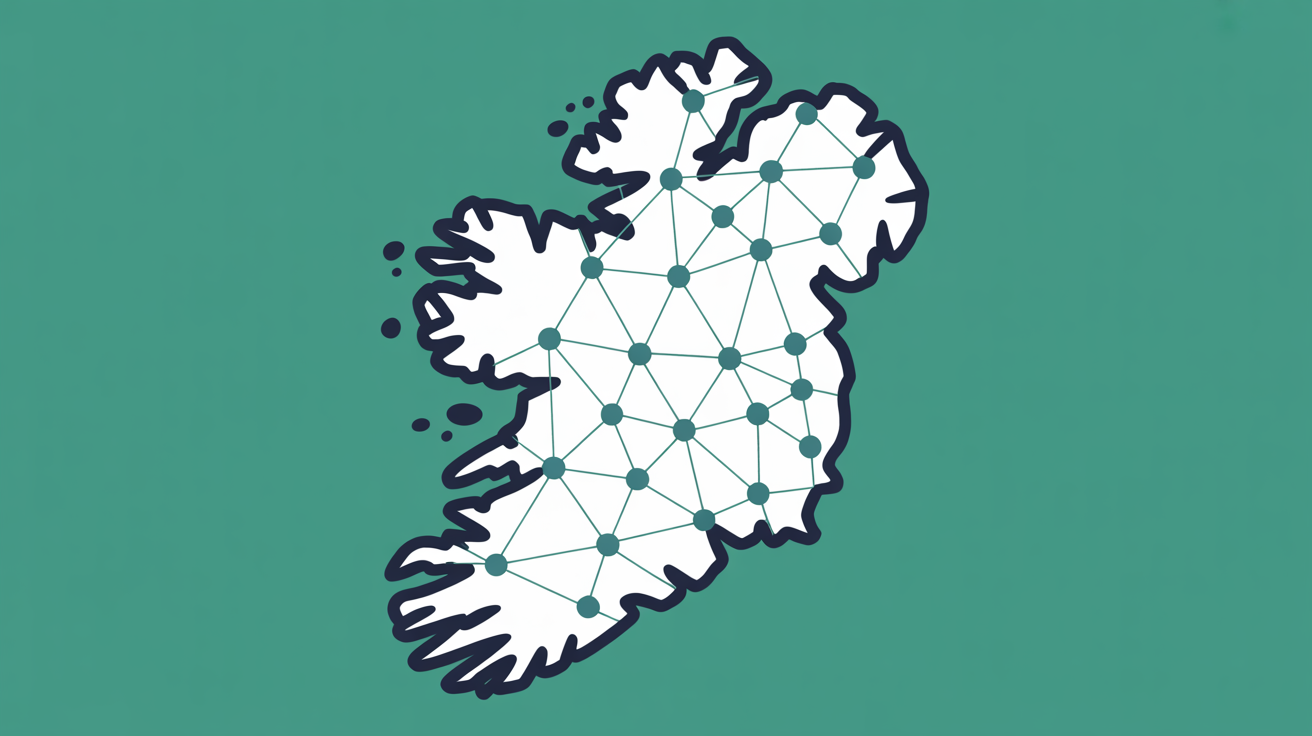
The simplest compliance posture for a business owner is one where data does not leave Irish jurisdiction in the first place. No SCCs to verify. No CLOUD Act exposure. No audit trail of contractual mechanisms to maintain and review. Data stays in Ireland because the infrastructure is Irish.
Web60 runs on SmartHost's sovereign Irish cloud infrastructure: all data stays on servers physically located in Ireland, operated by a company incorporated and operating here. The hosting stack runs Nginx, Redis, and PHP-FPM on Irish servers. A visitor who fills in a contact form goes to an Irish server. That is one category of data flow resolved, without any SCC paperwork.
The broader security and backup picture (how your data is protected across the full scope of your WordPress installation) starts with this hosting foundation and extends through every plugin, service, and integration you add on top of it.
I should admit a mistake here. A few years ago, we were evaluating a third-party service for customer communications. The vendor made strong GDPR compliance claims in their marketing material. I accepted those claims without reading their Data Processing Agreement properly. When I went back and reviewed it carefully, their definition of "GDPR-compliant" was technically accurate and practically insufficient for our purposes. It cost us time and a migration that could have been avoided. Compliance claims need to be read carefully, not accepted at face value, regardless of how prominently they appear on a sales page.
For the record: if you are running a large enterprise with dedicated legal counsel who can verify SCC compliance, manage transfer impact assessments, and maintain ongoing documentation: that is a legitimate approach, and global infrastructure providers can work in that context. But that is not most small businesses, and it is not the realistic operating model for an owner-operator running a business.
Conclusion
"GDPR-compliant" is a phrase that describes a legal mechanism, not a security guarantee. Understanding the difference is an operational decision every business needs to make before choosing a host, not after.
The hosting choice is the highest-leverage decision in your data architecture. It determines your baseline exposure before any other tool, plugin, or service enters the picture. Making that choice with accurate information, rather than relying on a two-word label on a sales page, puts you in a substantially different position.
The Meta case demonstrated that contractual mechanisms are not a blanket protection. The Ireland Digital Sovereignty Declaration signals where enforcement attention is heading. If the direction is clearly toward keeping data within European jurisdiction, the practical question is whether your hosting decision is already aligned with that direction.
Understanding the full scope of GDPR risk for your Irish business website is the logical next step once your hosting foundation is right.
Frequently Asked Questions
Does GDPR require my website data to be stored in Ireland?
No. GDPR does not mandate physical storage within Ireland or even the EU. It requires appropriate safeguards for any data transferred outside the EEA (typically an adequacy decision or Standard Contractual Clauses). However, keeping data in Ireland eliminates the need for those mechanisms entirely and removes CLOUD Act exposure from US-owned infrastructure. For most small businesses, it is the simplest compliance posture available.
What are Standard Contractual Clauses and do I need to worry about them?
SCCs are contracts approved by the European Commission that allow data transfers to countries without an EU adequacy decision, such as the US. They require the recipient to provide protection equivalent to EU standards. The concern for small businesses is that SCCs require active verification: you need to assess whether the protection is genuinely deliverable in practice, not just contractual on paper. Meta had SCCs and was still fined EUR1.2 billion in 2023. For most small businesses, hosting data in the EU or Ireland is more practical than managing SCC compliance independently.
Can I use US-based services like Mailchimp or Google Analytics on my Irish business website?
Legally, yes, if appropriate transfer mechanisms are in place with those providers. In practice, US-based services mean your customer data flows through US infrastructure, which carries CLOUD Act exposure regardless of the contracts in place. Cookie-free, EU-hosted analytics alternatives are available. EU-based newsletter tools exist. The question is not only whether your current setup is technically legal, but whether it represents the lowest-risk option for your business and your customers.
What happened with the Meta GDPR fine and why does it matter for small businesses?
In May 2023, the Irish Data Protection Commission fined Meta Platforms Ireland EUR1.2 billion for transferring personal data to the US in breach of GDPR Article 46(1). Meta had Standard Contractual Clauses in place. The DPC found those SCCs did not address the surveillance law risks identified by the Court of Justice of the EU (specifically the risk of US intelligence access to EU personal data). It matters for small businesses because it demonstrates that SCCs are not a blanket guarantee, and that the mechanism must address all risks in the destination country, including national security law.
How do I know if my website data actually stays in Ireland?
Ask your hosting provider directly: where are the physical servers located, and under which country's legal jurisdiction does the company operate? If the provider is a subsidiary of a US company, CLOUD Act exposure exists regardless of server location. Request their Data Processing Agreement and check whether data stays within Ireland or the EEA. For Web60, the infrastructure runs on SmartHost's sovereign Irish cloud, operated by a company incorporated and operating in Ireland.
Sources
Ian oversees Web60's hosting infrastructure and operations. Responsible for the uptime, security, and performance of every site on the platform, he writes about the operational reality of keeping Irish business websites fast, secure, and online around the clock.
More by Ian O'Reilly →Ready to get your business online?
Describe your business. AI builds your website in 60 seconds.
Build My Website Free →More from the blog
Website Hacked Again After Cleaning? Why the Malware Keeps Coming Back
Website hacked again after cleaning? Hidden backdoors, unpatched plugins and mistimed backups bring malware back. Five steps to a cleanup that sticks.
The Chrome HTTPS Warning Your New Customers See and You Never Will
Chrome now warns new visitors before opening any public site without HTTPS. Find the forgotten HTTP corners of your business website and fix them this week.