
SEO & PageSpeed
GDPR-Compliant Website Analytics: How Irish Businesses Track Visitors Without Cookies
When Marcus O'Sullivan launched his Dublin-based office supplies company in 2023, he thought website analytics would be straightforward. Install Google Analytics, track visitors, make data-driven decisions. Simple. By September 2024, his reality looked very different. Cookie consent banners were scaring customers away. His legal team warned about GDPR violations. Worst of all, he was losing 40% of his visitor data because people either ignored his cookie banner entirely or clicked reject. Marcus needed insights to grow his business, but every solution seemed to create more legal headaches than business value. His story mirrors thousands of Irish SMEs caught between data needs and privacy compliance.
The Data Dilemma: When Compliance Costs Business Intelligence
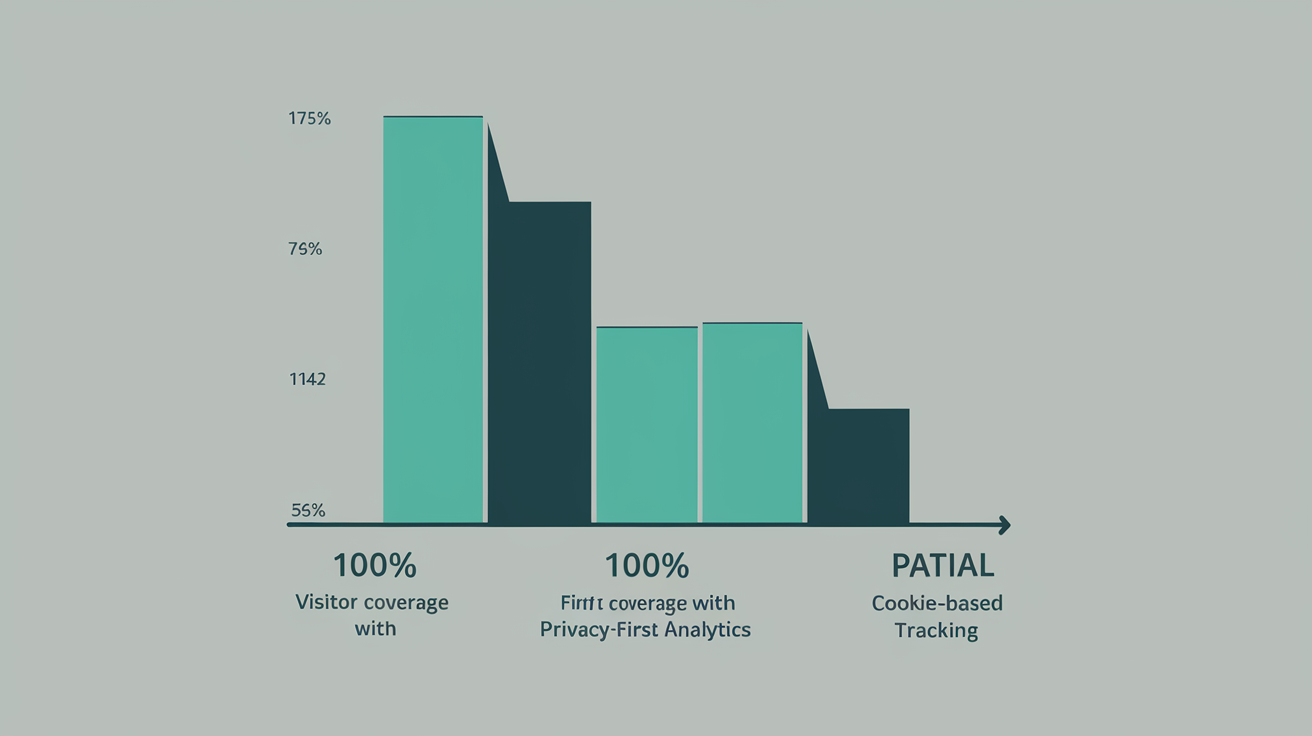
Marcus discovered what academic research confirms: only 11.8% of website cookie banners actually comply with GDPR [1]. His original banner was among the non-compliant majority. Even worse, between 40-60% of users ignore cookie banners entirely without making any decision, what privacy experts call 'banner ghosting' [2]. Combined with rejection rates, this meant his Google Analytics was capturing somewhere between 10-60% of actual visitor behaviour.
The numbers told a sobering story. His accountant had projected €200,000 in online sales for year one based on traffic estimates. By month eight, they were tracking toward €140,000. Was business actually down 30%? Or was he simply flying blind?
'I'd watch our Google Analytics dashboard show 50 visitors on a Tuesday,' Marcus recalls, 'then our payment processor would show 23 completed purchases that same day. The maths didn't add up. How do you make business decisions when your data captures maybe half the picture?'
This disconnect between analytics and reality forces Irish businesses into impossible choices. Accept legal risk with non-compliant tracking. Lose competitive intelligence with compliant but neutered analytics. Or abandon data-driven decision making entirely.
Marcus tried the middle ground first. His web developer implemented a fully GDPR-compliant consent banner with granular cookie controls. The results were brutal. Only 25.4% of users accepted all cookies on the first interaction [3]. Traffic data plummeted further. His conversion rate calculations became meaningless when the denominator was wrong by 70%.
The Search for Cookie-Free Intelligence
By October 2024, Marcus was researching alternatives. Privacy-first analytics platforms like Plausible and Fathom promised GDPR compliance without consent barriers. But they came with monthly subscriptions, €50-70 for his traffic levels, plus integration complexity.
Then his hosting provider pitched a server migration. 'We were on a shared hosting plan that was becoming unreliable during peak hours,' Marcus explains. 'Pages were loading slowly. The WordPress dashboard felt sluggish. I needed better performance anyway.'
During his hosting research, he discovered Web60's built-in analytics feature. Privacy-first tracking. No cookies. No consent banners. No additional monthly fees. All integrated into the hosting dashboard.
'The timing felt perfect,' he says. 'I could solve the hosting performance issues and the analytics compliance problem in one move.'
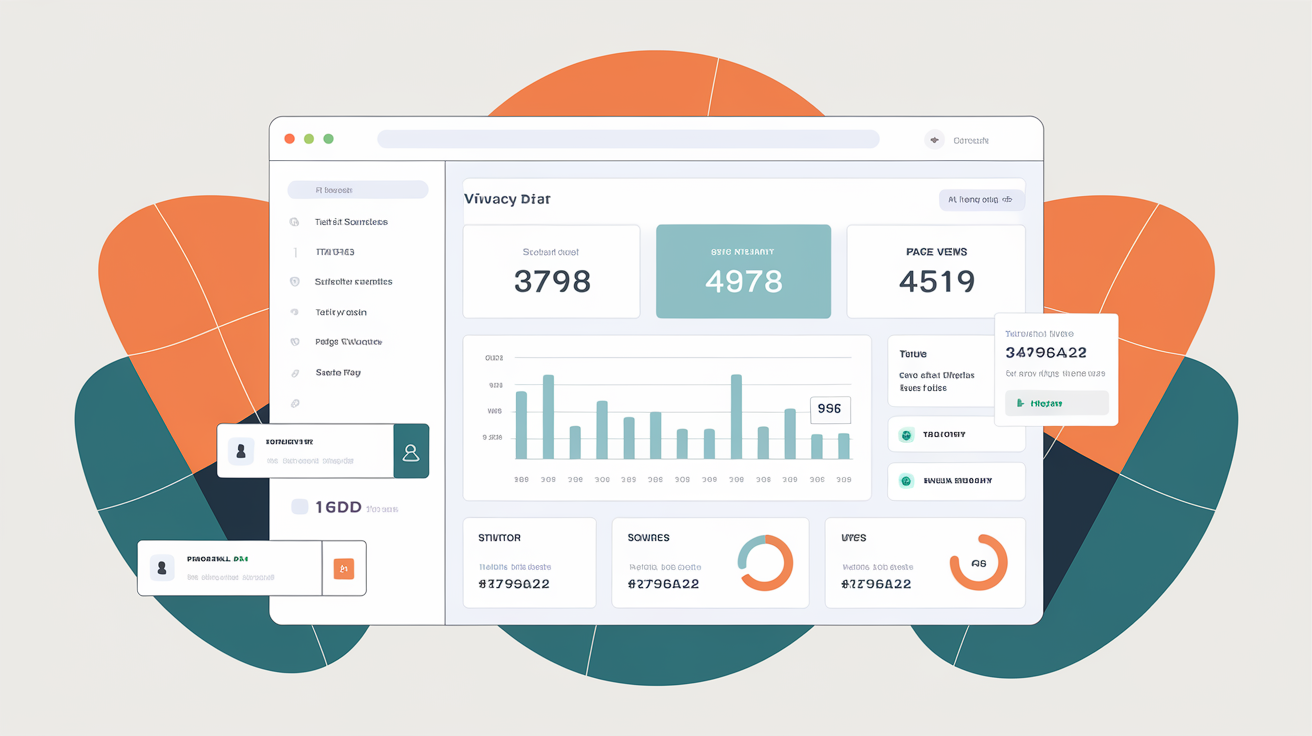
But Marcus needed proof before committing. He requested a demo of Web60's analytics dashboard. The interface showed visitor counts, page views, traffic sources, and device types, all without storing personally identifiable information or using browser cookies.
The technical approach impressed him. Server-side analytics capture visitor behaviour through log analysis and privacy-preserving techniques. No JavaScript tracking scripts. No third-party data transfers. No cookie consent requirements under GDPR Article 6.
'It reminded me why I preferred simple solutions in the first place,' Marcus reflects. 'One platform. One dashboard. No compliance headaches.'
Migration and Implementation Reality
Marcus migrated to Web60 in November 2024. The technical transition took three days including DNS propagation. The analytics comparison took three weeks to show meaningful patterns.
'The first shock was seeing our real visitor numbers,' he admits. 'Web60's analytics showed 340% more daily visitors than our compliant Google Analytics setup was capturing. We weren't losing business, we were losing visibility.'
The server-side approach revealed traffic patterns that cookie-based analytics had missed entirely. Mobile visitors from rural Ireland who typically rejected cookie banners. Repeat customers browsing multiple product categories. International buyers comparing prices across sessions.
Most importantly, Marcus could remove the cookie consent banner completely. No legal grey areas. No user experience friction. No data loss from banner ghosting or rejection.
'Our bounce rate appeared to drop by 15%,' he notes, 'but really, we were just measuring it accurately for the first time. The cookie banner itself was creating artificial bounces when people hit the back button rather than deal with consent options.'
The implementation required no technical expertise. Web60's analytics activated automatically with hosting setup. No tracking codes to install. No privacy policies to update. No consent management platforms to configure.
For businesses requiring more advanced analytics, Web60's privacy-first approach integrates with compliant tools like Plausible or Simple Analytics. But Marcus found the built-in data sufficient for his decision-making needs.
Reading the Data: Which Metrics Actually Matter
Cookie-free analytics capture different data points than cookie-based systems. Marcus learned to focus on actionable metrics rather than vanity numbers.
Pageviews and unique visitors provide business context without personal tracking. Traffic sources reveal marketing channel effectiveness. Device and browser data inform technical decisions. Geographic data shows market reach.
'I stopped obsessing over session duration and bounce rates,' Marcus explains. 'Those metrics depend heavily on tracking methods anyway. Instead, I focused on conversion patterns and peak traffic periods.'
The server logs revealed insights that surprised him. Tuesday mornings generated 40% more inquiries than Friday afternoons, despite similar traffic volumes. Mobile visitors converted at higher rates on product pages with fewer form fields. International visitors spent more time on shipping information pages.
These patterns weren't visible in his previous analytics setup because cookie rejections skewed the sample toward a specific user demographic, typically younger, tech-savvy visitors more likely to accept tracking.
'Privacy-first analytics gave me a clearer picture of our actual customer base,' Marcus reflects. 'Older buyers who reject cookies. Business customers browsing from corporate networks with tracking restrictions. International visitors concerned about data privacy.'
The accuracy improvement transformed his inventory planning. Previous analytics suggested certain products weren't popular because cookie-rejecting visitors weren't being tracked. The complete data showed strong demand across all product categories.
By January 2025, Marcus was making confident business decisions based on reliable visitor intelligence. No legal concerns. No data gaps. No monthly subscription fees for analytics tools.
Legal Peace of Mind: Eliminating Consent Banner Complexity
Removing the cookie consent banner simplified Marcus's legal compliance significantly. His solicitor confirmed that server-side analytics using aggregated, non-personal data requires no user consent under GDPR.
'The legal clarity was worth the migration effort alone,' Marcus states. 'No more wondering whether our consent banner met the latest regulatory interpretation. No more updating privacy policies for third-party analytics changes.'
Ireland's Data Protection Commission found 26% of major Irish websites using non-compliant consent mechanisms [4]. Many businesses unknowingly violate GDPR through poorly implemented cookie banners or pre-checked consent boxes.
Cookie-free analytics eliminates these compliance risks entirely. No personal data processing. No consent requirements. No cross-border data transfers to worry about.
The user experience benefits proved equally valuable. Marcus's customers no longer faced consent barriers when visiting his site. Page load speeds improved without third-party tracking scripts. Mobile users didn't struggle with overlapping banner designs.
'Customer feedback improved noticeably,' he reports. 'People mentioned that our site felt cleaner and loaded faster. They didn't know why, they just knew it worked better.'
For businesses handling sensitive information, medical practices, legal firms, financial advisors, cookie-free analytics provides additional professional credibility. Clients appreciate privacy-first approaches that don't require personal data sharing for basic website functionality.
Marcus recommends cookie-free analytics particularly for B2B companies. 'Business buyers are increasingly privacy-conscious,' he observes. 'Demonstrating privacy by design builds trust before they even contact you.'
The Strategic Concession: When Google Analytics Still Makes Sense
Cookie-free analytics aren't suitable for every business scenario. If you're running sophisticated remarketing campaigns across Facebook, Google Ads, and LinkedIn with detailed audience segmentation based on on-site behaviour, Google Analytics 4's cross-platform tracking capabilities genuinely provide more granular attribution data, assuming users consent to tracking.
Large e-commerce operations with dedicated marketing teams and substantial ad spend often benefit from the detailed conversion path analysis that cookie-based systems provide. The compliance overhead becomes worthwhile when marketing budgets exceed €50,000 monthly.
But that describes perhaps 5% of Irish SMEs. Most businesses need reliable visitor insights for basic decision-making: which pages work, when people visit, what drives inquiries. Cookie-free analytics delivers this intelligence without legal complexity or monthly fees.
Making Data-Driven Decisions Without Compromising Customer Privacy
Six months after switching to Web60's cookie-free analytics, Marcus has transformed his business operations. Inventory planning uses accurate demand signals. Marketing spend focuses on channels that actually drive traffic. Website improvements target real user behaviour patterns.
'The data quality is consistently high because we're not losing 40-70% of our visitors to consent banner rejections,' he explains. 'I can trust the numbers when making investment decisions.'
The cost savings proved significant too. No monthly analytics subscriptions. No consent management platform fees. No legal review costs for privacy policy updates.
Most importantly, customer trust improved. No intrusive tracking. No consent friction. No concerns about data harvesting or cross-site following.
'We built a reputation for respecting customer privacy,' Marcus notes. 'That became a competitive advantage, especially with business customers who value discretion.'
For Irish businesses navigating GDPR compliance while maintaining competitive intelligence, Marcus's experience offers a clear lesson: privacy-first analytics provide better business insights than privacy-compromising alternatives.
The technology exists. The legal framework supports it. The user experience benefits are immediate. Try Web60's cookie-free analytics with a free 24-hour demo and see the difference complete visitor data makes for your business decisions.
Conclusion
Marcus O'Sullivan's journey from data-starved to data-confident illustrates why privacy-first analytics represent the future of website intelligence in Ireland. Cookie-based tracking was always a compromise, trading visitor privacy for incomplete data riddled with consent-related gaps. Web60's built-in analytics eliminate this false choice entirely. Irish businesses can capture comprehensive visitor insights while respecting privacy, maintaining GDPR compliance, and building customer trust. The migration effort is minimal. The legal benefits are immediate. The data quality is superior. For SMEs ready to make informed decisions without compromising on privacy, Web60 offers the hosting and analytics solution that makes both possible in one integrated platform.
Frequently Asked Questions
Do I need cookie consent banners for website analytics in Ireland?
Not if you use privacy-first analytics that don't store personal data or use browser cookies. Server-side analytics that process only aggregated, anonymous data require no consent under GDPR. However, cookie-based systems like Google Analytics do require explicit user consent in Ireland and across the EU.
How accurate are cookie-free analytics compared to Google Analytics?
Cookie-free analytics are typically more accurate for total visitor counts because they capture all visitors, not just those who consent to tracking. Studies show cookie-based systems lose 40-90% of visitor data due to banner rejections and ghosting. However, cookie-free systems provide less granular user journey data than cookie-based alternatives.
What website metrics can I track without using cookies?
Cookie-free analytics can track page views, unique visitors, traffic sources, device types, browser information, geographic location (country/region level), and basic user paths through your site. You cannot track individual user sessions across multiple visits or detailed conversion attribution without cookies.
Is Google Analytics illegal in Ireland?
Google Analytics isn't explicitly illegal in Ireland, but several EU countries have ruled it violates GDPR due to data transfers to the US. The Irish DPC has highlighted widespread non-compliance with cookie consent requirements. Many businesses use Google Analytics legally with proper consent mechanisms, though this significantly reduces data quality.
How much do GDPR-compliant analytics tools cost?
Standalone privacy-first analytics platforms typically cost €5-70 per month depending on traffic volume. Plausible starts at €9/month, Fathom at €5/month. However, some hosting providers like Web60 include cookie-free analytics at no additional cost, making it more economical for small businesses.
Can I use both cookie-free analytics and Google Analytics together?
Yes, you can run both systems simultaneously. Many businesses use cookie-free analytics for comprehensive visitor data and Google Analytics (with consent) for detailed user behaviour analysis. This dual approach provides complete traffic visibility plus granular insights from consenting users.
Sources

Eamon leads sales at Web60 and SmartHost, working directly with Irish business owners making the switch from cheap shared hosting to managed WordPress. With a background in enterprise technology sales — including Oracle and multiple Irish SaaS businesses — he understands the questions Irish SMEs ask before committing to a hosting platform. He writes about hosting comparisons, total cost of ownership, web design for Irish businesses, and how to evaluate what you’re actually buying.
More by Eamon Rheinisch →Ready to get your business online?
Describe your business. AI builds your website in 60 seconds.
Build My Website Free →More from the blog
Next-Gen Image Revolution: Why 67% of Irish WordPress Sites Still Can't Serve AVIF in 2026
Why 67% of Irish WordPress sites can't serve AVIF images in 2026. Cut load times by 3.2 seconds, boost conversions 23%. See what's blocking adoption.
Why Irish Business Content Fails Google's 2026 E-E-A-T Standards (And How to Fix It)
Irish businesses lost 67% organic traffic from Google's E-E-A-T update. Learn how to rebuild authority with experience-based content that works.