
Infrastructure
MCP Protocol Revolution: How WordPress Sites Are Becoming AI-Powered Server Hubs for Business Automation
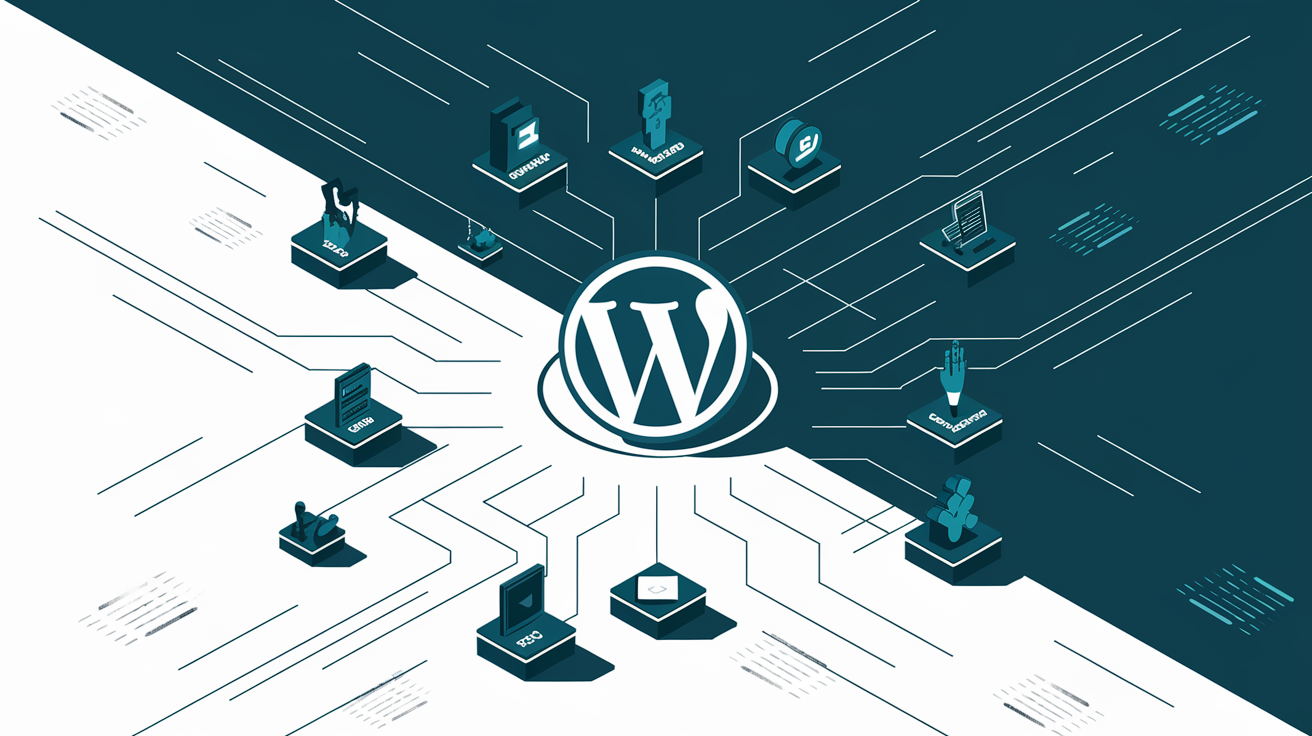
WordPress is undergoing its most significant transformation since the introduction of the block editor. The Model Context Protocol (MCP), introduced by Anthropic in late 2024, is turning WordPress sites into intelligent automation hubs that can communicate directly with AI agents. What began as a content management system is now becoming the control centre for business-wide automation workflows. This isn't just another plugin or feature update, it's a fundamental shift that requires entirely new infrastructure approaches. Traditional shared hosting simply cannot support the demands of MCP-enabled WordPress sites, creating a clear divide between businesses that can harness this technology and those left behind on outdated platforms. This is explored further in businesses left behind on outdated platforms.
Understanding the MCP Protocol: From Content Management to Control Hub
The Model Context Protocol represents a paradigm shift in how AI systems interact with web applications. Rather than treating WordPress as a passive content repository, MCP transforms it into an active participant in AI workflows.
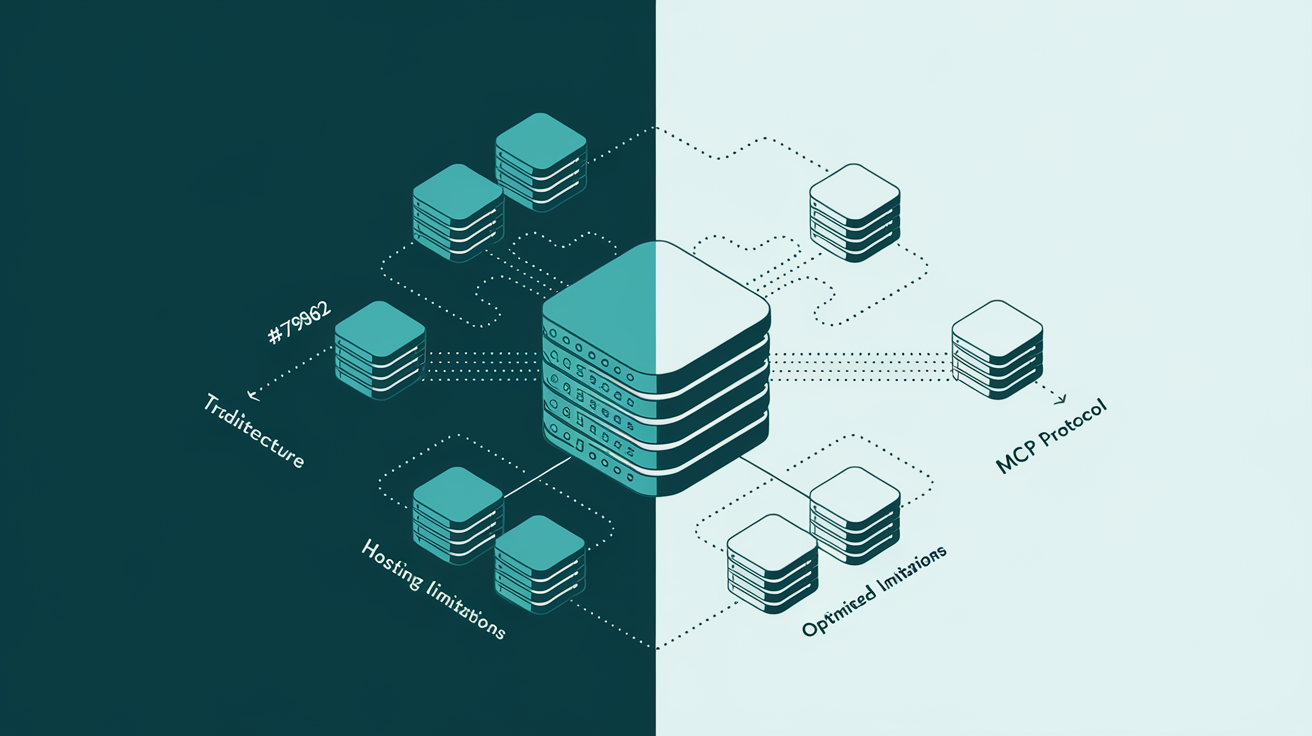
At its core, MCP provides a standardised way for AI agents to discover, understand, and execute WordPress capabilities. When an AI assistant connects to an MCP-enabled WordPress site, it doesn't just see content, it sees a comprehensive toolkit of available actions, data sources, and automation possibilities.
WordPress 6.9 introduced the Abilities API and MCP adapter, enabling AI assistants to discover and execute WordPress capabilities as tools, resources, and prompts [1]. This means AI agents can now:
- Create and edit content dynamically based on business rules
- Manage user accounts and permissions in response to external triggers
- Generate reports by querying WordPress databases directly
- Coordinate with external systems through WordPress as the central hub
- Execute complex workflows that span multiple plugins and integrations
The protocol operates through dual transport methods: STDIO for local development and HTTP-based communications for production environments. This flexibility ensures AI agents can maintain persistent connections whether they're running on the same server or communicating across networks.
What makes MCP particularly powerful is its token-optimised responses. Traditional REST API calls often return verbose JSON responses filled with unnecessary data. MCP responses reduce this verbosity by over 95%, making AI agent communications dramatically more efficient [2]. This efficiency gain becomes crucial when AI agents need to perform rapid-fire operations across multiple WordPress sites or handle real-time automation tasks.
For Irish businesses, this transformation means WordPress can now serve as the intelligent backbone for operations that previously required expensive enterprise software or complex custom development.
WordPress AI Engine Integration: Setting Up Your Site as an MCP Server
Transforming a WordPress site into an MCP server requires careful planning and the right hosting infrastructure. The process involves several technical components that must work smoothly together.
The first requirement is SSH access with persistent connections. AI agents need to maintain long-running sessions to handle complex automation workflows. Unlike traditional web visitors who connect briefly to view pages, AI agents may need to maintain connections for hours while processing batch operations or monitoring for trigger events.
WP-CLI support becomes essential for MCP functionality. AI agents use command-line interfaces to execute WordPress operations efficiently. They might need to:
- Install and configure plugins programmatically
- Import large datasets from external systems
- Execute database operations that would timeout through web interfaces
- Coordinate multi-site operations across WordPress networks
JWT authentication provides the security layer for MCP communications. Unlike traditional cookie-based authentication, JWT tokens allow AI agents to authenticate once and maintain secure access across multiple operations. This approach reduces authentication overhead and enables the rapid-fire operations that characterise AI automation workflows.
WordPress.com became the first major hosting provider to support MCP with OAuth by default, making every paid plan MCP-ready [3]. However, this convenience comes with limitations. Hosted solutions like WordPress.com restrict the plugins and customisations that businesses often need for comprehensive automation workflows.
Self-hosted WordPress sites offer more flexibility but require hosting providers that understand MCP's infrastructure demands. The server must handle:
- Multiple simultaneous AI agent connections
- Extended processing times for complex operations
- Increased memory usage from AI-driven workflows
- Higher bandwidth requirements for real-time communications
Web60's AI-powered infrastructure was designed with these demands in mind. Our managed WordPress hosting provides SSH access, WP-CLI support, and optimised server configurations that ensure AI agents can operate reliably without timeouts or resource constraints.
Infrastructure Requirements: Why Traditional Hosting Falls Short for MCP-Enabled Sites
The infrastructure demands of MCP-enabled WordPress sites expose the limitations of traditional hosting approaches. Shared hosting providers simply cannot deliver the resources and access levels that AI agents require.
SSH access represents the first major hurdle. Many shared hosting providers either don't offer SSH access or impose severe limitations. WP Engine, for example, times out SSH connections after just 10 minutes, completely inadequate for AI agents that need to maintain persistent connections for extended automation workflows.
Memory and processing requirements scale dramatically with MCP implementation. A traditional WordPress site might use 64MB of memory for normal operations. An MCP-enabled site handling multiple AI agent connections can easily require 512MB or more, especially when processing complex automation workflows or handling real-time data synchronisation.
| Hosting Type | SSH Access | Memory Limits | AI Agent Support | Cost Impact |
|---|---|---|---|---|
| Shared Hosting | Limited/None | 64-128MB | Poor | Low initial cost |
| Traditional VPS | Basic | 1-2GB | Moderate | 300-500% increase |
| Managed WordPress | Optimised | 2-4GB+ | Excellent | Purpose-built |
| Enterprise | Full | Scalable | Enterprise-grade | Premium pricing |
Bluehost exemplifies the shared hosting limitation problem. Their basic shared hosting plans, while affordable, provide no meaningful SSH access for AI automation. Upgrading to VPS hosting at €30 per month represents a 10-fold price jump, making MCP functionality accessible only to larger businesses.
SiteGround offers SSH access across all plans starting at €3.99 per month, but their renewal pricing jumps from €2.99 to €17.99 per month after the first term. This pricing structure makes long-term MCP implementation expensive and unpredictable.
Kinsta provides excellent performance and full SSH access, but their starting price of €35 per month puts MCP functionality out of reach for smaller Irish businesses. While their infrastructure can handle AI agent communications effectively, the cost barrier prevents widespread adoption.
Database performance becomes critical for MCP operations. AI agents frequently query WordPress databases to retrieve content, user information, and plugin data. Traditional shared hosting databases, often serving hundreds of sites simultaneously, cannot deliver the consistent performance that AI agents require.
Caching strategies must also evolve for MCP-enabled sites. Traditional page caching becomes less effective when AI agents are constantly modifying content. Object caching and database query optimisation become far more important. WordPress MCP implementations show 50-70% performance improvements through intelligent caching systems specifically designed for AI agent interactions [4].
Network latency affects AI agent responsiveness significantly. When AI agents need to communicate with WordPress sites in real-time, every millisecond of delay compounds across multiple operations. Irish businesses benefit from hosting their WordPress sites on local infrastructure to minimise latency for both human users and AI agents.
Real-World Automation Use Cases: From Customer Service to Content Generation
The practical applications of MCP-enabled WordPress sites extend far beyond theoretical possibilities. Irish businesses are already implementing AI automation workflows that deliver measurable operational improvements.
Customer service automation represents one of the most immediate applications. AI agents can now monitor WordPress contact forms, support tickets, and customer communications in real-time. When a customer submits a query, the AI agent can:
- Analyse the request and categorise it automatically
- Search the WordPress knowledge base for relevant solutions
- Generate personalised responses using existing content
- Escalate complex issues to human staff with full context
- Update customer records and interaction histories
This level of automation reduces operational time by up to 80% for WordPress automation workflows, freeing staff to focus on complex customer needs rather than routine inquiries [5].
Content generation workflows showcase another powerful application. AI agents can monitor industry news feeds, social media mentions, and competitor activities, then automatically generate relevant blog posts, social media content, and email newsletters. The AI agent can:
- Identify trending topics in the business's industry
- Research existing content to avoid duplication
- Generate original articles optimised for SEO
- Schedule publication across multiple channels
- Monitor engagement and adjust content strategies
E-commerce automation through MCP-enabled WordPress sites offers significant advantages for Irish retailers. AI agents can monitor inventory levels, customer behaviour patterns, and market conditions to:
- Automatically adjust product descriptions and pricing
- Generate targeted promotional campaigns
- Manage stock levels across multiple sales channels
- Process refunds and exchanges based on predefined rules
- Generate detailed sales reports and forecasts
Lead generation and nurturing workflows benefit enormously from MCP integration. AI agents can track visitor behaviour across WordPress sites, identify potential customers, and initiate personalised communication sequences. This approach has helped businesses save €500 per month in developer time when properly implemented with suitable infrastructure [6].
Compliance and documentation automation addresses a critical need for Irish businesses operating under EU regulations. AI agents can monitor WordPress sites for compliance issues, generate required reports, and maintain audit trails automatically. This capability becomes particularly valuable for businesses handling GDPR requirements or industry-specific regulations.
Performance Optimisation for AI Agent Communications
Optimising WordPress sites for AI agent communications requires a fundamentally different approach than traditional web performance optimisation. While human visitors primarily consume pre-rendered pages, AI agents interact dynamically with WordPress core functions, databases, and APIs.
Database query optimisation becomes the foundation of MCP performance. AI agents generate significantly more database queries than human visitors. A single automation workflow might execute hundreds of queries to retrieve user data, content information, and plugin settings. Traditional MySQL configurations optimised for web traffic often create bottlenecks for AI agent operations.
Key database optimisations include:
- Query caching with extended TTL values for stable data
- Index optimisation for frequently accessed AI agent queries
- Connection pooling to handle multiple simultaneous agent connections
- Read-replica configurations for data-heavy automation workflows
PHP memory management requires careful tuning for MCP workloads. AI agents often process large datasets or execute complex operations that exceed standard PHP memory limits. WordPress sites handling AI automation typically need:
- PHP memory limits of 512MB or higher
- Extended execution time limits for batch operations
- OpCode caching optimised for AI agent interaction patterns
- Session handling configured for long-running agent connections
Caching strategies must accommodate both human visitors and AI agents. Traditional page caching provides little benefit for AI agents that generate unique requests. Effective MCP caching focuses on:
- Object caching for frequently accessed WordPress data
- API response caching with intelligent invalidation
- Database result caching for complex queries
- Asset optimisation that doesn't interfere with agent operations
Network optimisation plays a crucial role in AI agent responsiveness. Unlike human visitors who can tolerate minor delays, AI agents performing rapid-fire operations are highly sensitive to network latency. Optimisation techniques include:
- CDN configurations that don't cache dynamic AI agent endpoints
- Keep-alive connections for persistent agent communications
- HTTP/2 multiplexing for efficient concurrent requests
- Compression optimised for API responses rather than HTML content
Monitoring MCP performance requires new metrics beyond traditional website analytics. Key performance indicators include:
- AI agent response times and error rates
- Database query performance under agent loads
- Memory usage patterns during automation workflows
- Network throughput for agent communications
Web60's optimised WordPress stack, built on WordOps with Nginx, PHP-FPM, Redis object caching, and FastCGI page caching, provides the foundation for efficient MCP operations. Our infrastructure automatically adjusts resource allocation based on AI agent activity patterns, ensuring consistent performance without manual intervention.
Security Considerations for MCP-Enabled WordPress Environments
Security for MCP-enabled WordPress sites requires a multi-layered approach that addresses both traditional web vulnerabilities and the unique risks introduced by AI agent communications. The expanded attack surface and elevated privileges necessary for AI automation create new security challenges.
Authentication mechanisms must balance security with the operational needs of AI agents. Traditional username/password authentication becomes impractical for agents that need to maintain persistent connections. JWT authentication provides a more secure approach, but implementation requires careful consideration:
- Token expiration policies that don't disrupt long-running workflows
- Scope limitation to prevent agents from accessing unnecessary functions
- Secure token storage and transmission protocols
- Regular token rotation without breaking active automation
Authorisation controls become critical when AI agents have elevated WordPress privileges. Agents often need capabilities that exceed normal user permissions to execute automation workflows effectively. Security frameworks must include:
- Role-based access control specifically designed for AI agents
- Capability restrictions that limit agents to necessary functions
- Audit logging for all agent actions and decisions
- Automated monitoring for unusual agent behaviour patterns
Network security considerations expand significantly with MCP implementation. AI agents communicate through network protocols that bypass traditional web security measures. Essential protections include:
- Firewall rules specifically configured for AI agent traffic
- VPN or encrypted tunnels for sensitive automation workflows
- Rate limiting that accounts for legitimate agent operation patterns
- Intrusion detection systems trained on AI agent communication signatures
Data protection requires special attention in MCP environments. AI agents often process sensitive business data, customer information, and proprietary content. Security measures must address:
- Encryption of data both in transit and at rest
- Access logging for all data operations performed by agents
- Data minimisation principles in agent operations
- Compliance with GDPR and other relevant regulations
| Security Layer | Traditional WordPress | MCP-Enabled WordPress | Risk Level | |---|---|---|---|---| | Authentication | Username/Password | JWT + OAuth | Medium | | Authorisation | User Roles | Agent-Specific Roles | High | | Network Access | HTTP/HTTPS | Multiple Protocols | High | | Data Protection | Basic Encryption | Enhanced Encryption | Critical |
WordPress MCP servers implement enterprise-grade security protocols including dual transport authentication and comprehensive logging systems. However, the hosting environment plays a crucial role in maintaining these security standards.
Server-level security hardening becomes essential for MCP-enabled sites. Traditional shared hosting environments cannot provide the isolation and control necessary for secure AI agent operations. Requirements include:
- Dedicated server environments or properly isolated containers
- Custom firewall configurations for AI agent traffic patterns
- Intrusion prevention systems that understand legitimate agent behaviour
- Regular security updates that don't break AI agent compatibility
Web60's security approach includes server-level hardening, fail2ban intrusion prevention, and automatic malware scanning designed to work smoothly with AI agent operations. Our security protocols recognise legitimate AI agent traffic patterns while maintaining protection against malicious activities.
The Future of WordPress: Beyond Websites to Intelligent Business Systems
WordPress is evolving from a content management platform into the foundation for intelligent business operations. The MCP protocol represents just the beginning of this transformation, with implications that extend far beyond traditional website functionality.
AI agent ecosystems are emerging where multiple AI agents built on MCP protocol for WordPress specialise in different business functions while coordinating through WordPress as a central hub. Customer service agents handle inquiries, content creation agents manage marketing materials, and analytics agents generate business intelligence reports, all working together through a single WordPress installation.
The integration possibilities expand with over 1,000 MCP servers now available, including FlowMattic MCP that supports 300+ app integrations [7]. This ecosystem enables WordPress sites to coordinate with virtually any business application:
- CRM systems for customer relationship management
- Accounting software for financial operations
- Inventory management for e-commerce businesses
- Project management tools for team coordination
- Marketing automation platforms for campaign management
Real-time business intelligence emerges naturally from MCP-enabled WordPress sites. AI agents can continuously monitor business metrics, customer behaviour, and market conditions, providing insights that previously required dedicated business intelligence platforms. Irish businesses can now access enterprise-level analytics through their WordPress sites without additional software investments.
Workflow automation reaches unprecedented sophistication when AI agents can coordinate across multiple systems through WordPress. Complex business processes that previously required human oversight can now run automatically:
- Customer places order through WordPress e-commerce
- AI agent processes payment and updates inventory
- Fulfillment agent coordinates with shipping providers
- Customer service agent sends personalised tracking information
- Analytics agent updates performance dashboards
- Marketing agent triggers follow-up campaigns
Predictive capabilities emerge from the continuous data processing that MCP-enabled WordPress sites perform. AI agents can identify patterns in customer behaviour, market trends, and operational efficiency, providing businesses with actionable forecasts and recommendations.
The competitive implications are significant for Irish businesses. Companies that successfully implement MCP-enabled WordPress automation will operate more efficiently, respond faster to market changes, and deliver superior customer experiences. Those relying on traditional websites and manual processes will struggle to compete.
Hosting infrastructure becomes a strategic business decision rather than a technical consideration, and understanding how AI is transforming WordPress hosting infrastructure is essential. The choice of hosting provider determines whether businesses can access these advanced capabilities or remain limited to traditional website functionality. Web60's AI-powered infrastructure positions Irish businesses at the forefront of this WordPress evolution, providing the technical foundation necessary for intelligent automation without the complexity of enterprise-level implementations.
This transformation represents the democratisation of enterprise-level automation capabilities. Small and medium Irish businesses can now access intelligent automation tools that were previously available only to large corporations with substantial IT budgets. The WordPress ecosystem, supported by appropriate hosting infrastructure, provides the gateway to this new level of operational sophistication.
Conclusion
The MCP protocol revolution transforms WordPress from a content management system into the intelligent heart of business operations. This evolution requires hosting infrastructure that can support AI agent communications, persistent connections, and the elevated resource demands of automation workflows. Traditional shared hosting simply cannot deliver the capabilities that MCP-enabled WordPress sites require. Irish businesses embracing this transformation gain significant competitive advantages through automated workflows, intelligent decision-making, and smooth integration with business systems. The choice of hosting provider becomes critical to accessing these capabilities. Web60's hosting infrastructure for AI-powered WordPress provides the foundation for MCP implementation with purpose-built infrastructure, SSH access, optimised performance, and Irish-based support that understands the technical demands of AI automation. Start your WordPress AI automation journey with Web60's 60-second setup and discover how your website can become the intelligent hub for your entire business operation.
Frequently Asked Questions
What is the MCP protocol and how does it work with WordPress?
The Model Context Protocol (MCP) is an open standard that allows AI agents to communicate directly with WordPress sites. It transforms WordPress from a passive content platform into an active automation hub where AI agents can create content, manage users, execute workflows, and coordinate with external systems. MCP works through standardised communication protocols that let AI agents discover and execute WordPress capabilities automatically.
Do I need special hosting for MCP-enabled WordPress sites?
Yes, MCP-enabled WordPress sites require hosting with SSH access, WP-CLI support, persistent connections, and higher resource allocations than traditional websites. Shared hosting typically cannot support these requirements. You need managed WordPress hosting with optimised infrastructure that can handle AI agent communications and extended processing workflows.
How much does it cost to implement MCP protocol on WordPress?
Implementation costs vary significantly based on your hosting provider and requirements. Traditional shared hosting may require expensive VPS upgrades costing €30+ per month. Premium managed hosting like Kinsta starts at €35 monthly. Web60 offers MCP-compatible infrastructure for €60 per year, including all necessary features without additional charges.
What are the main benefits of WordPress AI automation for Irish businesses?
WordPress AI automation can reduce operational time by up to 80% for routine tasks, save €500+ monthly in developer costs, improve customer service response times, automate content creation and social media management, generate business intelligence reports, and coordinate complex workflows across multiple business systems. These benefits help Irish SMEs compete more effectively in the digital marketplace.
Is MCP protocol secure for business-critical operations?
MCP implementations include enterprise-grade security features like JWT authentication, encrypted communications, and comprehensive audit logging. However, security depends heavily on proper hosting infrastructure with server-level hardening, intrusion prevention, and access controls specifically configured for AI agent operations. Shared hosting environments cannot provide adequate security for business-critical MCP workflows.
Can existing WordPress sites be upgraded to support MCP protocol?
Yes, existing WordPress sites can be upgraded to support MCP, but this requires compatible hosting infrastructure. The site needs SSH access, WP-CLI support, adequate server resources, and proper security configurations. If your current hosting doesn't support these requirements, you'll need to migrate to a compatible hosting provider before implementing MCP functionality.
What types of business processes can be automated with MCP-enabled WordPress?
MCP-enabled WordPress can automate customer service responses, content creation and publishing, e-commerce order processing, lead generation and nurturing, social media management, inventory management, report generation, compliance monitoring, and complex multi-step workflows that coordinate between different business systems. The automation possibilities are limited primarily by your hosting infrastructure capabilities.
Sources

Graeme Conkie founded SmartHost in 2020 and has spent years building hosting infrastructure for Irish businesses. He created Web60 after seeing the same problem repeatedly — Irish SMEs paying too much for hosting that underdelivers. He writes about WordPress infrastructure, server security, developer workflows, managed hosting strategy, and the real cost of hosting decisions for Irish business owners.
More by Graeme Conkie →Ready to get your business online?
Describe your business. AI builds your website in 60 seconds.
Build My Website Free →More from the blog
Why Irish Web Agencies Are Abandoning Managed Hosts That Block Professional Development Tools
Why Irish web agencies are abandoning managed hosts that block SSH, WP-CLI, and terminal access. Professional WordPress development requires professional tools.
Why Irish Restaurant Social Media Success Crashes Your WordPress Site (And How to Prepare for Viral Moments)
When social media drives 2,000+ visitors in 10 minutes, standard hosting crashes. Learn how Irish restaurants prepare for viral moments with auto-scaling infrastructure.