
Irish SME
Your Facebook Page Is Not a Business Website. Here Is What That Costs You.
Here is a scenario that plays out more often than this industry admits. A café on the Galway Quays, the kind with good coffee and a loyal following, runs its entire online presence through Facebook. Menu, opening hours, customer reviews, event listings. Two thousand followers. It feels solid.
Then Meta flags the page for a policy violation that never happened. The account gets disabled. No warning. No human to call. No appeal process that responds in under a fortnight. For three months, as far as the internet is concerned, that café does not exist.
Customers searching for opening hours find nothing. New visitors walking the Quays have no way to check the menu before deciding where to eat. Regulars assume the place has closed. Revenue drops. Reputation takes a hit. And the owner has absolutely no recourse, because she never owned that page in the first place.
This is not a scenario I invented for dramatic effect. As ABC News reported last year, Meta disabled business accounts across the United States for automated policy violations that turned out to be errors. One photographer's Instagram and linked Facebook page were disabled for three months before the mistake was acknowledged. The businesses that survived the blackout had one thing in common: they had a website.
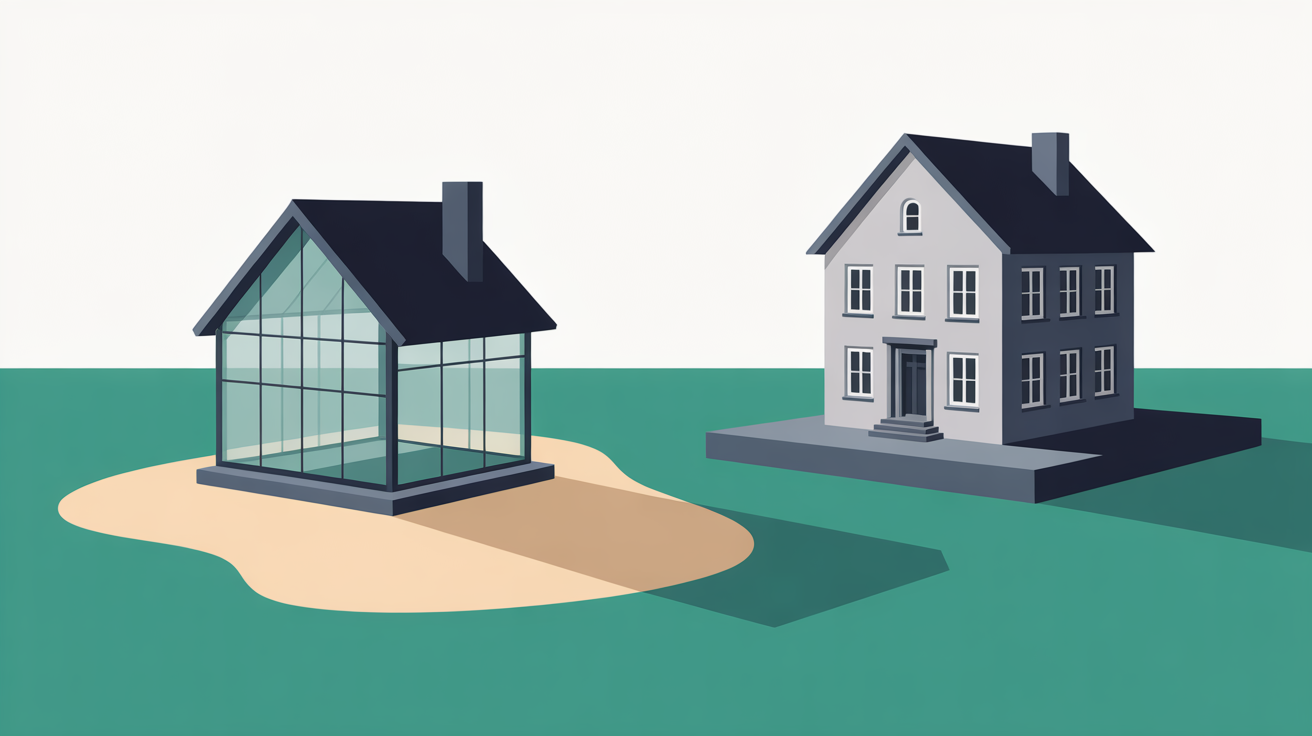
You Are Renting, Not Owning
A Facebook page is someone else's property. You do not own the URL. You do not own the follower list. You cannot export your customers' contact details into a format you control. You cannot decide how the algorithm distributes your content, or whether Meta decides next quarter that your industry violates a new policy.
This is not a technical problem. It is a business continuity risk.
When you build your entire online presence on a platform you do not control, you are a tenant. The landlord can change the rent, change the rules, or evict you without notice. I have watched this pattern repeat across twenty years in hosting infrastructure. The businesses that treat their online presence as an asset they own are the ones that survive platform shifts. The businesses that rent their entire digital identity from a social media company are one algorithm update away from invisibility.
Years ago, I told a small retailer not to worry about a website until they had their social media sorted. Build the audience first, convert later. Six months on, they had 2,000 followers and roughly 40 of them saw any given post. I learned the sequence the hard way.
The Reach You Think You Have Does Not Exist
Here is the number that should concern every business owner relying on Facebook: organic reach for business pages now sits somewhere between 2% and 5% of total followers, according to industry tracking by Hootsuite and analysis by Socialbakers. If you have 1,000 followers, between 20 and 50 of them see your average post. The rest never know you posted anything.
Back in 2012, organic reach was roughly 16%. It has been declining every single year since, and the reason is not subtle. Social media platforms generate their revenue from advertising. Limiting organic reach pushes businesses toward paid promotion. That is not a conspiracy theory. That is the business model, stated plainly in Meta's own quarterly earnings.
So when a business owner tells me their Facebook page is reaching their customers, I ask a simple question: which ones? The 3% who happened to be online when the algorithm decided your post was worth showing? That is not a customer communication strategy. That is a lottery.
A website is always there. Anyone who types your business name into Google, clicks a link in your email signature, or scans a QR code on your shopfront lands on a page you control. Every single time. No algorithm standing between your customer and your opening hours.

What Customers Actually Do Before They Buy
Roughly 8 in 10 consumers research a business online before visiting or purchasing, a figure that has been consistent across consumer behaviour surveys for years. They expect to find a website. Not a Facebook page. Not an Instagram grid. A website with structured, reliable information they can trust.
A Facebook page tells a potential customer you exist. A website tells them you are serious about existing. It provides services, pricing, location, and contact details in a format that search engines can index properly, any device can display without a social media login, and customers can bookmark for later.
Here is where it gets practical. Google ranks websites for local business searches, not Facebook pages. If you want to appear when someone nearby searches for what you sell, you need a website. Your Google Business Profile links to a website URL. Your structured data, the information that helps Google understand what your business does and where it operates, lives on a website. Without one, you are invisible to the single most important discovery channel for any local business in Ireland.
It Costs Less Than Your Monthly Facebook Ad Spend
The objection I hear most often is cost. Business owners assume a website means thousands of euros and weeks of waiting. That was true five years ago. It is not true now.
AI has fundamentally changed the economics. As we have explored in detail, the real cost of a business website in Ireland is no longer what the agency world trained everyone to expect. You describe your business in plain English, and AI builds a professional WordPress site in under a minute. No designer. No developer. No weeks of back-and-forth with a freelancer who will never understand your business the way you do.
WordPress powers 43% of the world's internet because it is proven, flexible, and future-proof. With Web60's all-inclusive managed WordPress hosting, you get the site, the hosting, SSL, backups, security, analytics, everything, for €60 a year. That is less than most businesses spend on a single month of Facebook advertising. And unlike Facebook advertising, the website is an asset you own permanently.
Self-building with AI is not a compromise. It is the better model. Nobody understands your business better than you. AI removes the technical barrier that used to make self-building impractical. The era of paying an agency thousands of euros to interpret your brief is ending, because you can do it yourself in 60 seconds.
The Honest Exception
I will give you the concession, because these articles are useless without one. For businesses built entirely around personal brand and visual community, think a fitness instructor running group classes through Instagram Stories, or a food creator building an audience through Reels, social media can genuinely be the primary channel. The visual format suits the product. The audience lives there. That is a real model, and it works for some people.
But even those businesses need a website for booking, payment processing, and the inevitable day Instagram changes how Stories work. Which it does roughly every six months. Social media is the signpost. The website is the destination. Neither works properly without the other.
The Part Nobody Mentions
A website does not market itself. I need to be honest about that. Putting one live and waiting for customers to find it is not a strategy. You still need to drive traffic, whether through search optimisation, social media posts, email, or old-fashioned word of mouth. That is the trade-off, and pretending otherwise would be dishonest.
But here is the difference that matters: when you post on social media with a link to your website, you are driving traffic to an asset you own. When you post on social media without a website, you are generating engagement for a platform that captures all the value. One strategy builds your business. The other builds Meta's quarterly revenue.
Conclusion
Social media matters. Nobody serious is arguing otherwise. But it is a distribution channel, not a foundation. The question every business owner needs to answer is whether they are building on ground they own, or ground someone else can pull from under them at any time.
A professional website costs less than a round of Friday evening drinks at this point. The cost of not having one is harder to calculate, because you never see the customers who searched for you, found nothing, and went to a competitor instead.
Sources
Hootsuite, The Decline of Organic Reach on Social Media in 2026 (https://blog.hootsuite.com/organic-reach-declining/)
ABC7 Chicago, Facebook and Instagram pages disabled by Meta after wrongful policy accusations (https://abc7chicago.com/post/facebook-instagram-pages-disabled-meta-being-wrongly-accused-child-endangerment-social-media-account-owners-say/18544206/)
wordpress.org, About WordPress and global market share (https://wordpress.org/about/)

Graeme Conkie founded SmartHost in 2020 and has spent years building hosting infrastructure for Irish businesses. He created Web60 after seeing the same problem repeatedly — Irish SMEs paying too much for hosting that underdelivers. He writes about WordPress infrastructure, server security, developer workflows, managed hosting strategy, and the real cost of hosting decisions for Irish business owners.
More by Graeme Conkie →Ready to get your business online?
Describe your business. AI builds your website in 60 seconds.
Build My Website Free →More from the blog
Christmas Delivery Dates on Your Website: Whose Problem Is a Late Parcel?
Your Christmas delivery dates are a promise under Irish law, not a courier's estimate. What happens when a gift arrives late, and how to word cut-off dates.
Used ChatGPT to Write Your Website Privacy Policy and Terms? Read Them Again
Used ChatGPT to write your website privacy policy or terms? Find the US clauses, missing Irish rights and unfair terms to fix before a customer reads them.