
SEO & PageSpeed
Google Business Profile in 2026: The Local SEO Revolution Your WordPress Site Can't Ignore
Looking at Q4 analytics this week, one pattern emerges across every Irish business site we monitor: Google Business Profile signals now directly influence WordPress rankings in ways that would have seemed impossible two years ago. The old playbook, maintain your GBP separately, focus on NAP consistency, hope for the best, died when Google launched AI Overviews in late 2024. Today, 46% of searches have local intent [1], and businesses with complete Google Business Profile listings receive 7x more clicks [2]. But here's what most WordPress site owners haven't grasped yet: your GBP data and your website data must speak the same language, or Google's AI will ignore both.
The 2026 Local Search Landscape: What Changed and Why It Matters
The integration started quietly. Google redesigned Business Profile reporting in June 2025, eliminating low-volume keyword data [1]. What looked like a minor interface change was actually Google preparing its systems for something bigger: direct GBP-to-website signal correlation.
Google completely changed the game when it dropped AI Overviews in the second half of 2024 [3]. Your Business Profile became the direct line to generative AI answers. When someone searches "solicitor near Sligo" today, Google's AI doesn't just scan your website, it correlates your GBP information, your website schema, your review sentiment, and your Core Web Vitals score into a single ranking decision.
The numbers tell the story. 'Near me' searches increased by 500% over three years [4], while 76% of people who search locally on smartphones visit a business within 24 hours [2]. But only 33% of websites meet Google's Core Web Vitals thresholds [5]. The businesses winning in 2026 aren't just the ones with good websites or complete Business Profiles, they're the ones where both systems work together.
Google also became significantly stricter about suspensions in 2025. Profiles get suspended for outdated information, details that don't match websites, or incorrect business categories [6]. The platform is demanding consistency across every touchpoint. Your WordPress site isn't just your digital shopfront anymore, it's Google's fact-checking system for your Business Profile claims.
How Google Business Profile Signals Now Influence WordPress Rankings
Three months ago, I recommended a popular SEO plugin to a business owner in Cork. Their rankings dropped 15 points within two weeks. The plugin was generating schema markup that contradicted their Google Business Profile opening hours. Google's AI spotted the mismatch and penalised both properties.
Google's algorithm now cross-references your GBP data with your website's structured data in real-time. Business name, address, phone number, opening hours, service categories, every field must align precisely. Discrepancies trigger ranking penalties that affect both local pack visibility and organic search performance.
The integration goes deeper than NAP consistency. Google's AI analyses review sentiment from your Business Profile and correlates it with on-page content. A business with 4.8-star reviews but website copy that doesn't reflect customer satisfaction creates cognitive dissonance for the algorithm.
Your GBP category selection directly influences which search queries your WordPress pages can rank for. A restaurant marked as "fine dining" in their Business Profile but targeting "cheap eats" keywords on their website will struggle with both. Google's AI understands semantic relationships between business categories and search intent.
Core Web Vitals scores now factor into local rankings differently than general SEO. Google prioritises sites that load quickly on mobile devices within your geographic area. A slow site hurts your Business Profile visibility in local searches, even if your GBP is otherwise perfect. The 73% Core Web Vitals failure rate among Irish WordPress sites makes this a critical issue for any business relying on local search visibility.
WordPress Schema Integration: Making Your Site Speak GBP Language
Schema markup became non-negotiable in 2026. But generic LocalBusiness schema won't cut it anymore. Your structured data must mirror your Google Business Profile information exactly, same business name formatting, identical address structure, matching phone number format.
The technical implementation requires precision. If your GBP lists "Dublin 2" as your postal code but your schema uses "D02", Google's AI flags it as inconsistent. If your Business Profile shows opening hours as "9:00 AM - 5:00 PM" but your schema uses "09:00-17:00", you've created a ranking penalty.
Review schema presents the biggest opportunity. Most WordPress sites ignore review markup entirely. But Google's AI prioritises businesses that display consistent review data across platforms. Your website should showcase the same review scores and sentiment that appear in your Business Profile.
Who Needs This Most?
-
Service-based businesses: One inconsistent phone number between your GBP and WordPress schema can cost you the customer who tries to call from search results. They dial, get a dead line, and move to your competitor.
-
Multi-location businesses: Each location needs separate schema markup that matches its individual Business Profile. One unified schema for all locations kills your local rankings across every area you serve.
-
Professional services: Legal, medical, and financial sites face stricter schema requirements. Incorrect credentials or service area markup can trigger compliance issues that affect rankings.
Local Content Strategy: Beyond NAP Consistency
Content strategy in 2026 means writing for both human readers and Google's Business Profile correlation algorithms. Your website content must naturally incorporate the same language and categories that appear in your GBP. You can launch your site with Web60 to see what this means in practice. You can begin your Web60 journey to see what this means in practice.
Location pages need semantic alignment with your Business Profile service areas. If your GBP lists "Greater Dublin Area" as your service region, your website should use consistent geographic terminology. Mixing "Dublin and surrounding counties" with "Greater Dublin Area" creates AI confusion.
Service descriptions require careful coordination. Your GBP business description has a 750-character limit, but your website can expand on those same concepts. The key is semantic consistency, use related terms and phrases that reinforce your Business Profile messaging without duplicating it exactly.
Customer review integration transforms passive testimonials into active ranking signals - the same principles that underpin Google's 2026 E-E-A-T requirements for Irish business content, where demonstrated experience outweighs generic expertise. Import your Google reviews to your WordPress site using schema markup that preserves the original review dates and ratings. This creates cross-platform validation that Google's AI recognises and rewards.
Local landing pages must target the same search terms that drive your Business Profile impressions. Google Business Profile insights show which search queries bring visitors to your listing. Create WordPress content that targets these exact phrases.
Technical Implementation: GBP API Integration for WordPress
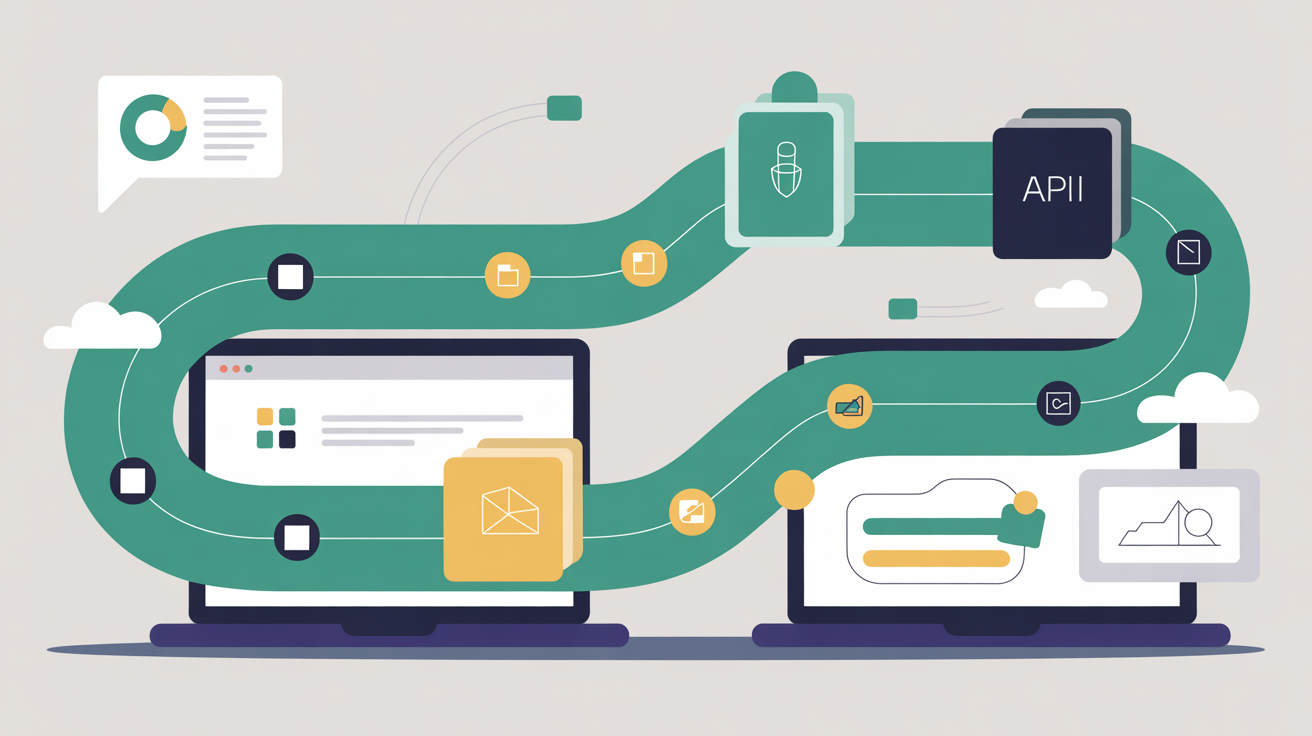
The Google Business Profile API allows direct integration between your WordPress site and your Business Profile data. This ensures automatic synchronisation of hours, contact information, and service updates.
WordPress plugins can now pull GBP data directly into your site's schema markup. When you update your Business Profile hours, the change propagates to your website's structured data within 24 hours. This eliminates the manual coordination that causes most consistency errors.
Automated review display presents the biggest technical opportunity. Configure your WordPress site to import new Google reviews automatically, displaying them with proper schema markup that Google's AI can validate against your Business Profile.
The Dead Simple GBP-WordPress Integration Workflow
Step 1: Audit. Export your current GBP data and compare it line-by-line with your WordPress schema markup. Note every discrepancy, no matter how minor.
Step 2: Standardise. Choose one authoritative source for each data point, usually your Business Profile, and update all other instances to match exactly.
Step 3: Automate. Implement API integration or plugins that keep your WordPress schema synchronised with Business Profile changes.
Step 4: Monitor. Track ranking changes and Business Profile impressions weekly to identify any correlation issues.
Many businesses skip the monitoring step and wonder why their integration efforts aren't working. A properly implemented system should show improved local pack visibility within 4-6 weeks of deployment.
Measuring Success: New Metrics for Integrated Local SEO
Traditional local SEO metrics miss the integration story. You need to track correlation between your Business Profile performance and WordPress rankings.
Google Search Console now provides location-specific performance data that correlates with Business Profile insights. Compare your website's local keyword rankings with your GBP search appearance data. Successful integration shows improved performance across both channels.
Business Profile click-through rates to your website indicate integration health. If your GBP receives high impressions but low website clicks, your integration likely has consistency issues that confuse potential customers.
Core Web Vitals scores require geographic context. A site that loads quickly in Dublin but slowly in Cork will underperform in Cork local searches. Monitor your performance metrics by location, not just overall averages.
Review velocity between platforms provides integration health indicators. Consistent review patterns across Google and your WordPress site suggest good integration. Sudden divergence often indicates technical problems with your review import system.
Common Integration Mistakes That Kill Local Rankings
The most expensive mistake is treating Google Business Profile as a separate marketing channel. Businesses that maintain their GBP independently of their WordPress SEO strategy create conflicting signals that confuse Google's AI. For related reading, see our guide on The Hidden Costs of Cheap Hosting You Only Discover After Signing Up. For related reading, see our guide on How Irish Shops and Cafés Use Their Website to Bring Customers Through the Door.
Inconsistent business name formatting destroys integration efforts. Your legal business name, GBP name, and WordPress schema must match character-for-character. "O'Brien & Associates" is not the same as "O'Brien and Associates" to Google's algorithms.
Overlooking mobile performance metrics specifically for local searches costs rankings. Google weighs Core Web Vitals differently for local queries. A site that performs well for general searches but poorly for location-specific terms will struggle in local results.
Most integration failures happen during WordPress hosting transitions. Moving to a new host without preserving schema markup and GBP API connections breaks the correlation signals Google relies on. Web60's migration service maintains these critical integrations during host transitions, preserving the ranking signals you've worked to build.
Schema markup errors compound over time. A small inconsistency becomes a major ranking factor as Google's AI learns to distrust your data. Regular schema validation prevents these issues from escalating into significant visibility problems.
One limitation worth understanding: automated systems can't account for temporary business changes in real-time. If you close early for a staff meeting, your WordPress site won't reflect that immediately. Manual updates are still necessary for exceptional circumstances.
Conclusion
The local SEO landscape fundamentally shifted in 2026. Google Business Profile integration isn't optional anymore, it's the foundation of local search success. Your WordPress site and Business Profile must work as a unified system, speaking the same language to Google's AI-powered ranking algorithms.
The businesses winning local search in 2026 understand this integration. They've moved beyond basic NAP consistency to create smooth data correlation across platforms. Their WordPress hosting supports fast mobile loading for local queries. Their schema markup mirrors their Business Profile information exactly.
Web60's Irish infrastructure and built-in local SEO optimisation tools give you the foundation for successful GBP integration. Our managed WordPress hosting delivers the Core Web Vitals performance that local rankings demand, while our schema optimisation ensures your site speaks Google's language fluently. Start your GBP-WordPress integration today, your local competitors are already working on theirs.
Frequently Asked Questions
How often should I sync my WordPress schema with my Google Business Profile?
Ideally, your schema should sync automatically with GBP changes. If you're managing manually, check consistency weekly and update immediately after any Business Profile changes. Google's AI flags discrepancies within 24-48 hours of detection.
Does my WordPress hosting affect local SEO rankings?
Yes, significantly. Google weighs Core Web Vitals differently for local searches, prioritising sites that load quickly on mobile devices within your geographic area. Hosting location and performance directly impact local search visibility.
What happens if my Google Business Profile data doesn't match my website?
Google's AI flags inconsistencies between your GBP and website data, creating ranking penalties that affect both local pack visibility and organic search performance. Even minor formatting differences can trigger these penalties.
Can I use the same schema markup for multiple business locations?
No. Each location needs individual schema markup that matches its specific Google Business Profile information. Using unified schema for multiple locations eliminates your local rankings across all service areas.
How long does GBP-WordPress integration take to affect rankings?
Properly implemented integration typically shows improved local pack visibility within 4-6 weeks. However, fixing major inconsistencies can show ranking improvements within days of implementation. You might also find our article on WordPress Powers 43% of the Internet: Why It Is the Only Serious Choice for Your Business Website useful. You might also find our article on What Happens After You Try the Web60 Demo: From Test Site to Live Business in Minutes useful.
Do I need special plugins for Google Business Profile integration?
While not strictly necessary, plugins that automatically sync GBP data with your WordPress schema markup eliminate the manual coordination that causes most consistency errors. The Google Business Profile API enables direct integration.
Sources

Eamon leads sales at Web60 and SmartHost, working directly with Irish business owners making the switch from cheap shared hosting to managed WordPress. With a background in enterprise technology sales — including Oracle and multiple Irish SaaS businesses — he understands the questions Irish SMEs ask before committing to a hosting platform. He writes about hosting comparisons, total cost of ownership, web design for Irish businesses, and how to evaluate what you’re actually buying.
More by Eamon Rheinisch →Ready to get your business online?
Describe your business. AI builds your website in 60 seconds.
Build My Website Free →More from the blog
The Google Supplier Unit Now Covers Local Businesses. Most Owners Have Never Heard of It.
Google's supplier unit gives direct providers a slot beside the booking sites and directories in EEA results. It now covers local business queries.
Google Does Not Read Your Embedded Widget: The Services Search Never Sees
Your booking widget, menu or price list may sit in an iframe Google never reads. How to verify what search engines actually store from your page.