
Industry News
Google Free Product Listings Have Gone in Ireland. What Shops Do Now
Christmas stock is landing in shops all over the country this month, and most owners are deciding which products go up on the website first. Before you give an evening to that job, you should know that one of the places those products used to appear for free has gone.
In mid-September, Google stopped showing free product listings and its "popular products" carousels in search results across the European Economic Area. Ireland is in the EEA. If your shop relied on Google to put your stock in front of searchers at no cost, that route has largely closed. Nobody sent you an email about it.
What changed in September, and why
This did not come out of nowhere. On 23 July 2026 the European Commission fined Google €890 million for two breaches of the Digital Markets Act, and €460 million of that was for favouring its own shopping, hotel, transport and sports results over rival services in Search [1]. The instruction was simple. Stop.
For products, Google's response was to remove the free formats altogether. Search Engine Roundtable reported on 18 September that the free listings and popular products carousels had vanished from EEA results over the previous couple of days, with one tracking firm measuring drops of somewhere between 90% and 100% in Germany, France, Belgium, Sweden and the Netherlands [2]. Google's Ads Liaison, Ginny Marvin, confirmed the removal was down to the DMA ruling.
What this means for an Irish shop
Two honest caveats before anyone panics. The tracking data I have seen does not cover Ireland specifically, although the change was made for the EEA as a whole. And reports differ on whether the separate Shopping tab still carries free listings in every country. Your own Merchant Center figures from late September will tell you more about your shop than any commentary, mine included.
In place of the old carousels, Google's documentation on regional differences in Search now describes two boxes for product searches in the EEA: an aggregator unit that features comparison shopping sites, and a supplier unit for businesses that sell directly [3].
Back in August we walked through how free product listings worked for Irish shops, including the comparison shopping service you had to choose inside Merchant Center. That account setup still matters for paid ads. The free spot in the main results, for now, does not exist.
Why the small shop feels this first
You might expect a ruling against Google's self-preferencing to help small sellers. Google itself predicted the opposite. In a November 2024 post on its DMA compliance, the company said earlier changes had "benefited large online travel aggregators and comparison sites" and made it "harder for airlines, hotel operators, and small retailers to reach customers" [4]. Read that as a company arguing its own case with a regulator, because that is exactly what it is. The direction of travel is still hard to argue with.
Comparison sites have feed specialists and marketing budgets. The owner-operator has a Tuesday evening and a laptop.
A quiet way to lose a Christmas
Consider a hypothetical bike shop in Roscommon that built a steady trickle of online orders on those free listings. Someone searches for a particular commuter helmet, the shop's product appears with a photo and a price, and a sale follows. In late September the trickle stops. Nothing on the website is broken. No error, no warning. The owner finds out weeks later, when the November orders that usually start arriving simply do not, and by then half the gift-buying season is gone.
That is what a channel you do not own costs you. It can be switched off by a regulatory fight between two parties you will never meet.

Three routes still open to Irish shops
None of these replaces what was lost on a like-for-like basis. Between them, they cover most of the ground.
| Route | What it costs | What you need | Who controls it |
|---|---|---|---|
| Paid Shopping ads through a comparison shopping service | A cost per click, plus any service fee | A Merchant Center product feed and an ad budget | Google and the comparison service |
| The supplier unit | Nothing | A website Google can crawl, with real product pages | Google decides when it appears |
| Your own product pages in ordinary results | Nothing beyond your website | Fast, clear product pages on a site you control | You own the page; Google decides the ranking |
Paid Shopping ads through a comparison shopping service
Paid Shopping ads did not go anywhere. In the EEA they run through a comparison shopping service, and Google Shopping is one of those services, so the Merchant Center account you set up for free listings is still the foundation. The difference is that every appearance now costs you a click.
For some shops, this genuinely is the right answer. If you carry a few thousand products, your margins can absorb a cost per click, and you have someone who enjoys tuning feeds, a specialist comparison shopping partner will probably earn back its fee faster than anything you can build on your own site before Christmas. That is a real business with a real marketing budget. It is not the craft shop selling forty products.
The supplier unit
The second route is free, and very few owners know about it. Google's documentation says the supplier unit covers product searches for users in the EEA, and that a direct seller does not "need to provide additional data beyond what's accessible through web crawling" to appear in it [5]. In plain English, your website is your application form.
There is a catch, and you should know it before you count on this. The supplier unit only shows when the aggregator unit shows, so it sits beside the comparison sites rather than replacing them, and Google alone decides when either appears. We covered how the supplier unit works for direct providers when Google extended it in September. The same logic now applies to products.
Your own product pages in ordinary results
The ordinary blue links are still there. A product page with a clear name, a visible price, real photos and a description you wrote yourself can rank for the exact searches the carousel used to catch. Building that takes longer than uploading a feed. It is also the only one of the three routes that keeps working whatever Brussels and Google agree next.
Speed matters more here than most owners expect, because a product page that drags on a phone loses the shopper before the price even appears. Our WordPress performance guide for Irish businesses covers the caching and image basics in plain language.

What a shop website needs to catch this traffic
So what does a website need if it is going to pick up the slack? Strip it back and the list is short:
- Every product on its own page. Not buried in a PDF catalogue, and not living only inside a social media shop.
- Prices and stock as readable text. Google can only show what it can read.
- Pages that load quickly on a phone. Plenty of gift shoppers will tap through from a search on their phone.
- An owner who can add the Christmas range in an evening. If every new product means emailing an agency and waiting, the season runs out before the pages go up.
- Hosting that holds up in December. The busiest weeks of the year are when a slow or broken site costs the most.
Web60 was built to tick those boxes. Your shop runs on full WordPress, with the whole plugin ecosystem including WooCommerce, on Irish infrastructure with Redis object caching and FastCGI page caching. For the shopper, that means a product page that opens quickly when they tap through from a search. On your side of the counter, the cost stays at €60 a year whatever happens to Google's click prices, with nightly backups and SSL included.
And if your products currently live only in a feed or on a marketplace, the AI builder can have a WordPress site in place in about a minute from a description of your business. That leaves your evening free for the product pages, which nobody knows better than you do.
The shelf you rent and the shelf you own
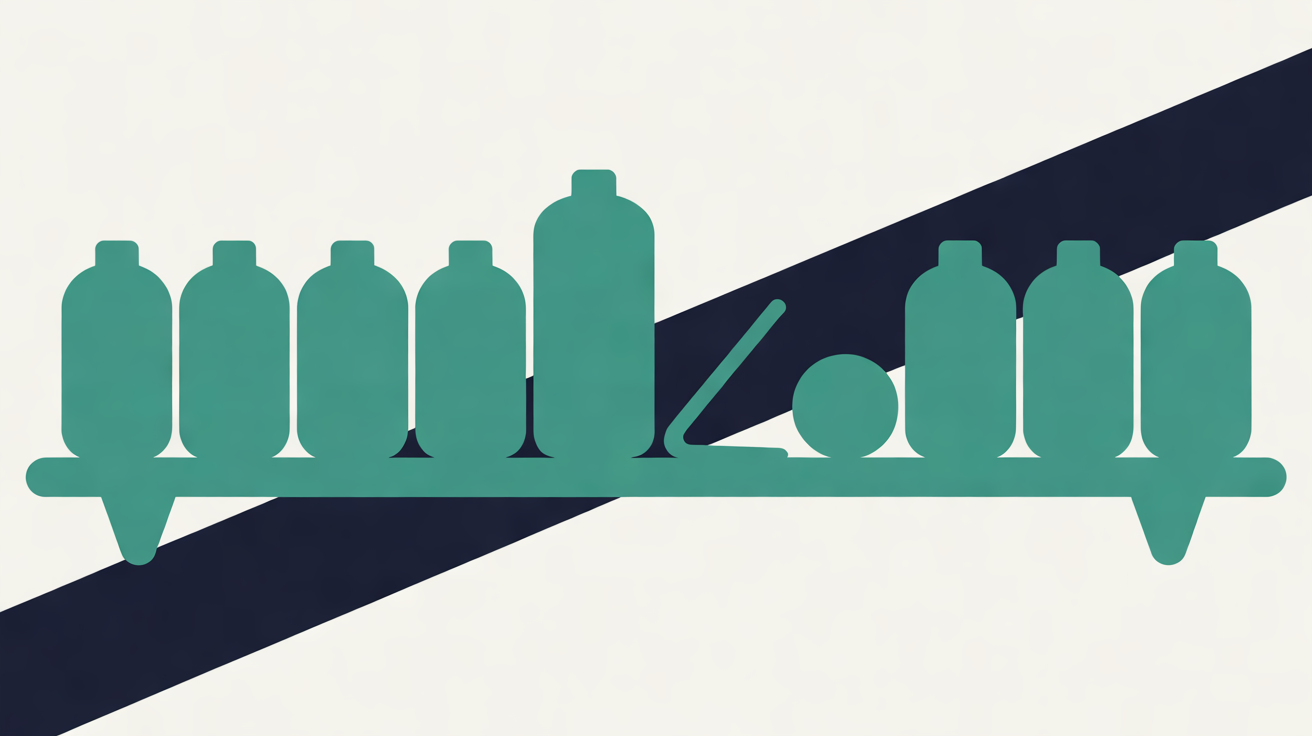
For a few years, Google gave independent shops a free shelf in its search results. Between them, the regulators and Google have now taken it down. Some of that space may come back in another form, and nobody outside Google knows yet.
What you can control is whether your best products have a proper home that search engines can read. Before the November rush, make sure your twenty best sellers each have a page worth finding, and then decide calmly whether paid Shopping ads are worth the click cost for everything else.
Frequently Asked Questions
Are Google free product listings gone in Ireland?
Google removed free product listings and popular products carousels from search results across the European Economic Area in mid-September 2026, citing the Digital Markets Act. Ireland is in the EEA. The published tracking data covers other EEA countries rather than Ireland, and reports differ on the separate Shopping tab, so check the performance report in your own Merchant Center account for the clearest picture of your shop.
Should I delete my Google Merchant Center account?
No. Paid Shopping ads in the EEA still run from Merchant Center through a comparison shopping service, and the product data you have already built is what any future campaign would use. Leaving the account in place does no harm, and rebuilding a product feed from scratch later is a chore you can avoid.
Can my shop still appear on Google for free?
Yes, in two ways. Your own product pages can rank in the ordinary search results, and Google's supplier unit can show direct sellers beside comparison sites for product searches in the EEA, based on what Google crawls from your website. Neither is guaranteed, and both depend on having proper product pages on a site you control.
What is a comparison shopping service?
A comparison shopping service, or CSS, is a company that places Shopping ads on Google on behalf of merchants. In the EEA, Shopping ads have to run through one. Google Shopping is itself a CSS, and independent services also operate, each with its own fees or pricing model, so compare what you would pay before you sign up.
Sources

Eamon leads sales at Web60 and SmartHost, working directly with Irish business owners making the switch from cheap shared hosting to managed WordPress. With a background in enterprise technology sales — including Oracle and multiple Irish SaaS businesses — he understands the questions Irish SMEs ask before committing to a hosting platform. He writes about hosting comparisons, total cost of ownership, web design for Irish businesses, and how to evaluate what you’re actually buying.
More by Eamon Rheinisch →Ready to get your business online?
Describe your business. AI builds your website in 60 seconds.
Build My Website Free →More from the blog
Budget 2027 for Small Business: The Website Jobs to Do Before January
Budget 2027 for small business: the minimum wage hits €14.94 in January. Three website jobs to do now, and the overhead you can cut before the new year.
Google Lens Search: What the New Multimodal Filter Means for Your Business Website
Google Lens now handles billions of camera searches and Search Console tracks them. How to make your business website photos the match Google finds.