
Industry News
56% Customer Churn Rate Exposed: How Hosting Industry Consolidation Forces Irish Providers to Choose Between Price Wars or Premium Services

Going through the latest CloudLinux industry data this week, one statistic stopped me cold: 56% of hosting providers report that price sensitivity is the primary reason customers leave. Not poor performance. Not terrible support. Price. This number reveals something fundamental about how hosting industry consolidation is reshaping the competitive landscape, particularly for Irish providers caught between global giants racing to the bottom and the need to maintain quality service delivery.
The CloudLinux Numbers: 56% Churn Reveals Industry Crisis
The CloudLinux Web Hosting Trends Report 2026 exposes an industry under severe price pressure. Beyond the headline 56% churn figure, the data shows 41% of hosting providers are losing customers to SaaS platforms like Wix and Squarespace. Meanwhile, 29% cite price competition as their top profitability threat.
These numbers tell a story. The hosting market grew from $130.1 billion in 2023 to $159.9 billion in 2024, yet providers are struggling to maintain margins. Pricing has declined 15-30% since 2020, with typical shared hosting dropping from €3.50-€4.00 monthly to €2.50-€3.50.
But here's what the data doesn't capture: the quality cost of this race to the bottom. When a Waterford manufacturer switches hosting providers purely on price, they often discover that €2 monthly hosting comes with €200 monthly headaches. Slow load times. Weekend outages. Support tickets that take days to resolve.
The 56% figure isn't just about customer churn. It's about an industry fragmenting into two distinct paths: commodity providers competing on price alone, and premium providers competing on measurable value.
Consolidation Timeline: How Global Hosting Giants Are Reshaping Ireland
Hosting industry consolidation accelerated dramatically in 2024. CVC Capital Partners acquired a majority stake in Namecheap for $1.5 billion. Private equity-driven acquisitions continue reshaping the competitive landscape, with holding companies acquiring regional providers and immediately implementing cost-cutting measures.
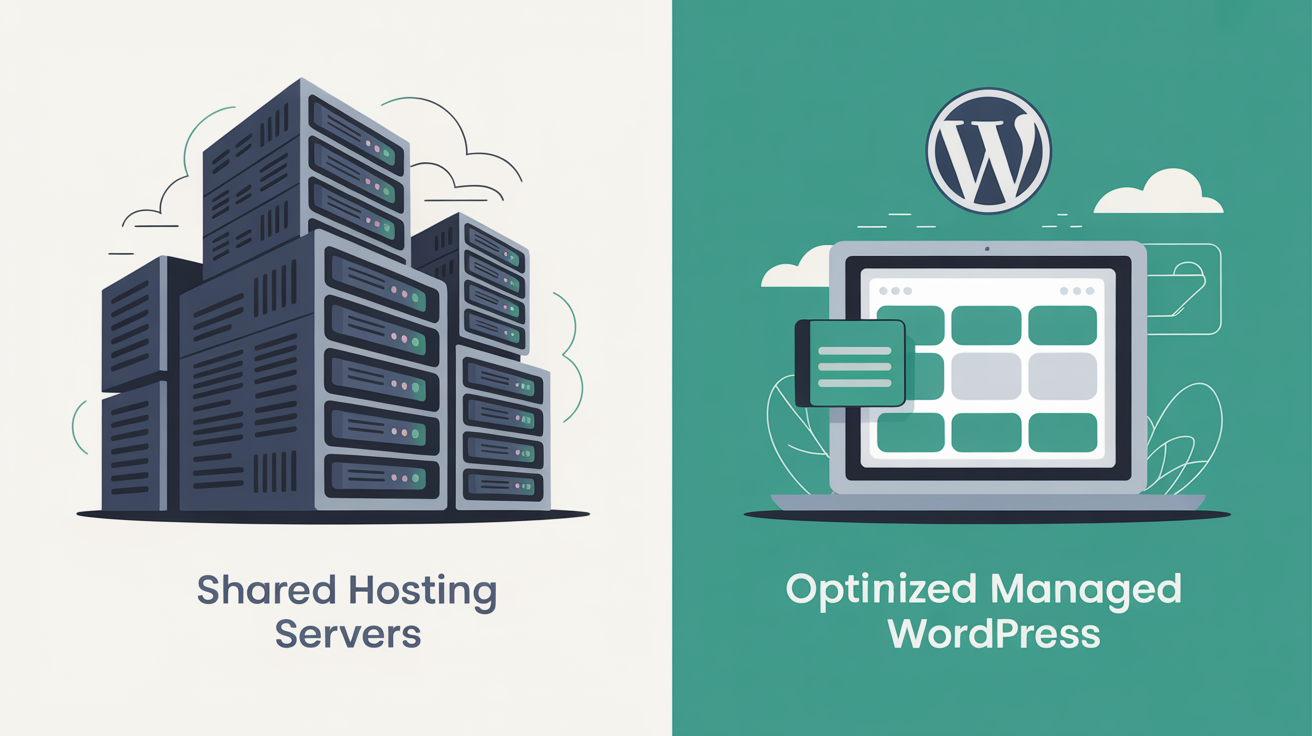
The pattern is predictable: acquire, offshore support, defer infrastructure investment, extract maximum profit before the service quality deteriorates enough to trigger customer exodus. This consolidation strategy works for holding companies because they can cycle through acquisitions faster than customers can evaluate alternatives.
For Irish businesses, this creates a particularly complex challenge. Global consolidators offer attractive introductory pricing but lack understanding of Irish regulatory requirements. GDPR compliance becomes an afterthought. Data sovereignty gets buried in lengthy terms of service.
The Irish hosting market, projected to reach $565 million by 2025 with 13.5% annual growth, represents an attractive target for these consolidation strategies. Yet this growth figure masks the underlying pressure on local providers who understand the market but struggle to match global pricing scales.
The Binary Choice: Race to Bottom vs Premium Positioning
Irish hosting providers face a stark strategic choice. Follow the consolidation playbook and compete purely on price, accepting razor-thin margins and degraded service quality. Or differentiate through premium services that justify higher pricing through measurable outcomes. You can start building with Web60 to see what this means in practice. You can see what Web60 includes to see what this means in practice.
The race-to-bottom strategy seems attractive initially. Lower prices generate leads. Marketing becomes simple: €2.99 beats €4.99 in customer acquisition cost calculations. But this approach requires massive scale to remain profitable. Without the acquisition capital of global consolidators, Irish providers attempting this strategy often find themselves trapped: too expensive to compete with giants, too cheap to invest in quality infrastructure.
Premium positioning requires different thinking. Rather than competing on price, you compete on outcomes. Website performance monitoring that goes beyond basic hosting metrics becomes a selling point rather than an operational cost. Customer support transforms from a cost centre into a competitive advantage.
The CloudLinux data supports this approach: 55% of customers choose WordPress hosting based on speed, ahead of price (47%) and support quality (45%). This suggests that while price sensitivity drives churn, performance drives initial selection. The opportunity lies in proving value before customers experience the frustration of cheap hosting limitations.
Why 'Test Before Invest' Mentality Favours Premium Providers
One strategic shift I've witnessed across multiple client consultations: businesses are adopting a 'test before invest' mentality for hosting decisions. Rather than committing to annual contracts based on marketing promises, they want proof of performance before making long-term commitments.
This trend favours premium providers who can demonstrate measurable outcomes. When Web60 offers 60-second site setup with staging environments, it's not just a feature list. It's an invitation to test real performance under actual conditions before committing to annual billing.
Commodity providers struggle with this approach because their value proposition relies on price comparison rather than performance demonstration. You cannot test support quality in a free trial. You cannot evaluate infrastructure resilience without experiencing real traffic loads.
The testing approach also reveals hidden costs of cheap hosting. A business might discover that their €2.99 monthly plan requires €29.99 monthly in premium plugins to achieve acceptable performance. Or that "unlimited" bandwidth comes with CPU limitations that crash their site during peak traffic periods.
Premium providers benefit because their transparent pricing includes features that commodity providers charge extra for: staging environments, premium CDN, Redis caching, automated security hardening.
Data-Driven Value: How AI Infrastructure Justifies Higher Pricing
The key to premium positioning in a price-sensitive market lies in demonstrating measurable ROI through data-driven infrastructure decisions. AI-powered hosting platforms can justify higher pricing by automating optimisations that would otherwise require expensive technical expertise.
Consider WordPress performance optimisation. Traditional hosting requires manual configuration of caching layers, CDN settings, database optimisation, and security hardening. Each element demands technical knowledge most Irish businesses lack. The alternative becomes hiring expensive consultants or accepting suboptimal performance. For related reading, see our guide on Stop Wasting Time in WordPress Admin: Simple Management for Busy Business Owners. For related reading, see our guide on Switching Hosting Providers Without Losing Your Google Rankings: A Plain-English Guide.
AI infrastructure transforms these manual processes into automated optimisations. Server resources scale automatically based on traffic patterns. Caching configurations adjust dynamically to content types. Security responses happen in real-time rather than after human intervention.
This automation creates measurable value that justifies premium pricing. When Web60's all-inclusive €60 annual plan delivers measurable performance improvements over €30 annual shared hosting, the extra €30 becomes an investment in reduced operational overhead rather than a hosting expense.
The data supports this positioning. Businesses report 30-45% improvements in Core Web Vitals scores after migrating to optimised WordPress stacks, though one client with particularly complex WooCommerce configurations saw closer to 60% improvement.
Who Needs This Most?
-
eCommerce businesses: AI-optimised infrastructure prevents the 3am emergency calls when your checkout system crashes during peak sales periods. Automated scaling means your Black Friday traffic surge doesn't become a revenue disaster.
-
Lead generation businesses: Performance monitoring becomes competitive intelligence. When your contact forms load 40% faster than competitors, that translates directly to higher conversion rates and more qualified leads.
-
Service businesses and agencies: Staging environments eliminate the risk of breaking client sites during updates. One broken website costs more in reputation damage than years of premium hosting investment.
The Irish Opportunity: Local Expertise Meets Global Standards
Hosting industry consolidation creates specific opportunities for Irish providers who understand both local market needs and global infrastructure standards. While international giants focus on price competition and scale efficiency, Irish providers can differentiate through regulatory expertise and customer relationship quality.
GDPR compliance exemplifies this opportunity. Global consolidators treat data protection as a legal compliance checkbox. Irish providers understand it as a competitive advantage. When customer data stays within Irish sovereign infrastructure, that's not just regulatory compliance, it's a trust signal that resonates with privacy-conscious businesses.
Local support becomes another differentiator. Rather than outsourced ticket systems with 24-48 hour response times, Irish providers can offer real-time support during Irish business hours. The value proposition shifts from cheapest available to most reliable when needed.
The timing favours this approach. As consolidation degrades service quality at traditional providers, businesses actively seek alternatives that prioritise performance over pure cost reduction. Irish providers positioned as premium alternatives can capture customers fleeing the race-to-bottom consolidation strategy.
However, one reality check: if you're running enterprise-scale operations with dedicated DevOps teams and complex multi-server architectures, global consolidators might genuinely suit your technical requirements better. Their enterprise infrastructure genuinely supports workloads that specialist Irish providers cannot match economically.
But for the vast majority of Irish businesses, the craft brewery building online sales, the accountancy firm modernising client portals, the retailer expanding beyond physical locations, local expertise with global infrastructure standards represents the optimal balance between cost, performance, and reliability. You might also find our article on WordPress Plugins Explained: What They Are and Which Ones Your Business Actually Needs useful. You might also find our article on How to Get Your First Business Website Live This Weekend for €60 useful.
Conclusion
The 56% churn statistic from CloudLinux exposes an industry at a crossroads. Consolidation pressures will continue forcing providers into binary choices: compete purely on price or differentiate through demonstrable value. For Irish businesses, this creates opportunity to work with providers who choose the premium path deliberately rather than defaulting to commodity competition. The question isn't whether you can afford premium hosting, it's whether you can afford the hidden costs of choosing based purely on price. Test the difference for yourself.
Sources

Eamon leads sales at Web60 and SmartHost, working directly with Irish business owners making the switch from cheap shared hosting to managed WordPress. With a background in enterprise technology sales — including Oracle and multiple Irish SaaS businesses — he understands the questions Irish SMEs ask before committing to a hosting platform. He writes about hosting comparisons, total cost of ownership, web design for Irish businesses, and how to evaluate what you’re actually buying.
More by Eamon Rheinisch →Ready to get your business online?
Describe your business. AI builds your website in 60 seconds.
Build My Website Free →More from the blog
EU Packaging Rules: The Irish Exemption That Does Not Travel With Your Parcel
The EU packaging rules applied from 12 August 2026. Ireland's 10 tonne exemption never covered exports. What that means for every parcel you post abroad.
The Advertising Code Applies to Your Website, Not Just Your Ads
Ireland's Advertising Code covers your own website, not only paid ads. Complaints are free, and upheld cases get published with your business name on them.