
SEO & PageSpeed
No, an llms.txt File Will Not Get Your Business Cited by ChatGPT

You have probably heard that adding an llms.txt file to your WordPress site is how you get your business mentioned when a customer asks ChatGPT for a recommendation. It has become one of the most repeated pieces of advice in AI marketing circles this year, sold by agencies as the modern equivalent of submitting your site to a search engine in 1998. It does not work, and neither OpenAI nor Perplexity has ever said it does. Below is what their own documentation actually says, and what genuinely earns a business a mention when a customer asks an AI chatbot instead of typing a search query.
What an llms.txt File Actually Is
The idea started in 2024 as a proposal for a plain-text file, sitting at yourdomain.com/llms.txt, that summarises a website in a format easier for a language model to parse than a full HTML page. Think of it as a menu for AI agents: a short markdown document listing the pages on a site and what each one covers, so a tool does not have to wade through navigation menus and cookie banners to find the useful content underneath.
The idea makes sense on paper. Coding assistants such as Cursor and Continue, along with some retrieval pipelines built on the Model Context Protocol, genuinely do read llms.txt files when they are present. For a developer tool checking documentation, that is a real, working use case.
The problem is where the advice gets applied. Somewhere between that narrow, technical use case and a plugin promising to get a plumbing firm mentioned in ChatGPT, the claim stretched a long way past anything OpenAI, Google, Anthropic or Perplexity has actually confirmed. It fits a wider pattern we see across AI-powered WordPress for Irish businesses: the tooling moves fast, and the advice sold around it tends to move faster still.
No Major AI Provider Has Confirmed Reading It at Answer Time
Verifying the claim is simple enough: read the crawler documentation each provider publishes directly.
OpenAI operates three separate crawlers, each documented individually [1]. GPTBot collects content that may be used to train future models. OAI-SearchBot is the one that powers ChatGPT's live search feature, fetching pages in real time to answer a question. ChatGPT-User fires when someone inside a chat asks the assistant to open a specific page. Nowhere in that documentation does OpenAI mention llms.txt, a special summary format, or any file read ahead of the page itself.
Perplexity's Documentation Reads the Same Way
Perplexity publishes an equivalent breakdown [2]. PerplexityBot indexes the web on an ongoing basis. Perplexity-User browses live, on behalf of someone typing a question into the app. Both follow robots.txt rules for access. Neither is documented as treating llms.txt as anything other than an ordinary text file, if either notices it at all.
I went looking for a single sentence, from any major provider, confirming that llms.txt changes what gets cited. It is not there. If it existed, it would be a two-line marketing win for whichever provider said it first. None of them has taken it.
Google Has Already Told You What Actually Works
Google went further and addressed the question directly, rather than leaving it to be inferred from crawler behaviour. Its own Search Central documentation states plainly that there are no additional requirements to appear in AI Overviews or AI Mode, no special machine-readable files to create, and no special schema.org markup needed beyond what already helps a page rank normally [3].
The same guidance is explicit about where AI Overviews content comes from: the same index, the same ranking signals, and the same helpful-content standards that decide ordinary organic results [4]. A page that already struggles to rank on page one is not somehow more visible to an AI summary. It is drawing from the identical pool.

For a business owner, that is good news dressed up as bad news. Bad news, because there is no shortcut. Good news, because it means the work is not new work. Whatever has already been keeping a site's Core Web Vitals fast, its content genuinely useful, and its structure clear for a human reader, is the same work that keeps it eligible for an AI answer.
Crawler Access Is the Setting That Actually Moves the Needle
If llms.txt is not the lever, what is? Access. An AI answer engine cannot cite a page it was never allowed to fetch, and AI bots already account for a striking share of the traffic hitting WordPress sites, whether a business has decided to grant that access deliberately or not.
Training crawlers and retrieval crawlers are not the same thing, and treating them as a single setting in robots.txt is the mistake I see most often. GPTBot trains models. OAI-SearchBot and ChatGPT-User retrieve pages to answer a live question. PerplexityBot indexes; Perplexity-User browses on request. A site can block the training-only crawlers, which plenty of businesses reasonably want to do, while still allowing the retrieval crawlers that make a citation possible in the first place.
We covered the exact syntax for doing that correctly in our piece on robots.txt and AI scrapers, because getting the directives wrong is its own failure mode, separate from anything to do with llms.txt.
Where This Actually Goes Wrong
I have seen this go wrong in the other direction too. A client blocked every user agent with "AI", "GPT" or "bot" in the name after a scare story about content theft, then asked, six months later, why a competitor kept coming up first when customers asked ChatGPT for a recommendation. The block was working exactly as configured. It just was not the block anyone had actually wanted.
Picture a wedding florist in Carlow who spends a Saturday afternoon building an llms.txt file because a course promised it was the new SEO. Weeks later, a bride asks ChatGPT to suggest florists near her venue. A competitor's name comes up instead. The florist's site never had a real chance, not because of a missing text file, but because her contact page loads slowly, her services sit in a single unstructured paragraph, and nobody had checked whether OAI-SearchBot could reach the site at all. This is a composite scenario, not a specific business, but the pattern repeats often enough to be worth naming.
Why This Is Worth Fixing Now, Not Eventually
Gartner predicted in 2024 that traditional search engine volume would fall by roughly a quarter by 2026, as generative AI tools absorb queries that used to go straight into a search box [5]. Gartner was careful to frame that as scenario modelling rather than certainty, and the real figure for any given business will depend heavily on its sector and its customers' habits. The direction, though, is not seriously in dispute. A growing share of the questions that used to become a search, "plumber near me", "accountant for a sole trader", "wedding florist near my venue", now get asked directly to a chatbot instead.
None of that changes what a business actually needs to do. It changes how urgently it needs to do it. The fundamentals, useful content, a fast and reliably reachable site, clear structure, are the same whether the reader is a person on Google or a language model summarising an answer.
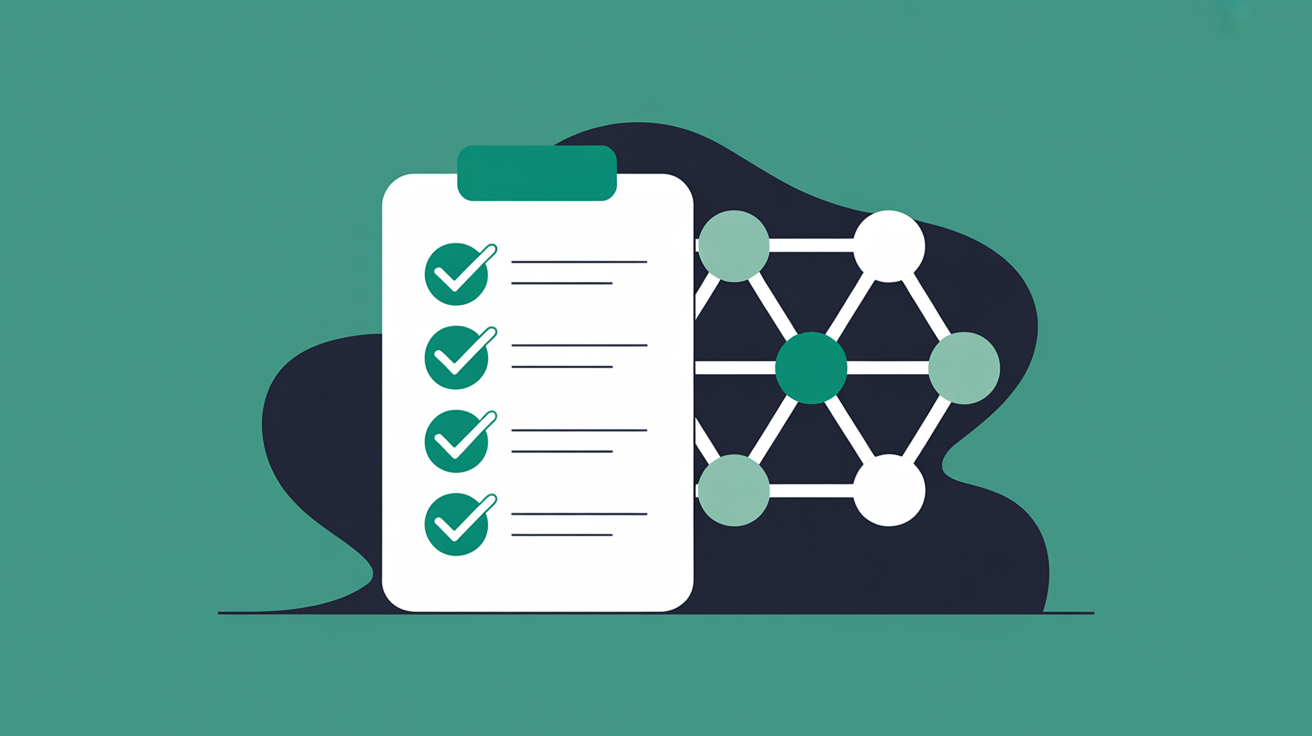
Four Checks Worth Running Before You Chase Anything Else
Verify crawler access. Open your robots.txt file and confirm OAI-SearchBot, ChatGPT-User, PerplexityBot and Perplexity-User are not blocked, even if you are deliberately blocking training-only crawlers such as GPTBot.
Restructure for direct answers. Rewrite key pages so the first sentence under each heading answers the question a customer would actually type, rather than building up to the point three paragraphs later.
Deploy structured data where it fits. Add FAQ and Organisation markup through the WordPress plugin ecosystem. It is not a confirmed requirement for AI visibility, but it still earns rich results in ordinary Google Search, which feeds the same index AI Overviews draw from.
Monitor for citation. Ask ChatGPT, Perplexity and Google's AI Overview the exact questions a customer would ask, on a regular schedule, and check server logs for retrieval crawler hits. There is no dashboard for this yet from any provider. Doing it by hand is the only honest way to know.
None of this happens by accident. The site underneath still has to respond fast enough that a crawler does not time out, still needs an accessible plugin ecosystem for schema, and still needs someone who understands the difference between a training bot and a retrieval bot well enough to set the robots.txt rules correctly in the first place. That is infrastructure work, not content work, and it is exactly what proper managed hosting is for.
Web60 builds every site on Nginx, PHP-FPM and Redis object caching, so a crawler gets a fast, reliably answering server rather than a timeout, and gives full access to the WordPress plugin ecosystem from day one to add the schema markup that still matters for ordinary search. Anyone building or rebuilding a site with AI answer engines in mind can see how that foundation gets assembled through Web60's AI Website Builder, rather than retrofitting it after the fact.
One honest limitation worth stating plainly: none of this guarantees a citation. AI answer engines select sources algorithmically, using criteria none of the providers publish in full, so a business can do everything on this list correctly and still not be the one chosen on a given day. The checklist above maximises eligibility. It cannot buy selection.
Conclusion
An llms.txt file is not a bad idea. It has a real, narrow use case for developer tools and AI agents that are built to read it. It is just not the thing that gets a business cited when a customer asks ChatGPT, Perplexity or Google's AI Overview for a recommendation.
That comes down to whether the retrieval crawlers can reach the site, whether the content answers the question in the first sentence, and whether the fundamentals that were already worth doing for ordinary search are actually in place. The businesses showing up in AI answers this year are not the ones that added a text file. They are the ones that were already doing the basics properly, and made sure nothing was quietly blocking the door.
Frequently Asked Questions
What is an llms.txt file and do I actually need one?
It is a plain-text file at yourdomain.com/llms.txt that summarises a site's content in a format some AI agents and coding tools can parse more easily than a full web page. Developer tools such as Cursor and Continue, and some Model Context Protocol integrations, do read it. Consumer AI chatbots like ChatGPT and Perplexity are not documented as reading it, so it will not get a business cited in an AI answer. It is low-risk to add but should not be treated as an SEO fix.
Does ChatGPT actually read my website?
When someone uses ChatGPT's search feature, OpenAI's OAI-SearchBot fetches pages live to answer the question. That is separate from GPTBot, which collects content that may be used to train future models. If OAI-SearchBot can reach a site and the content directly answers a question, it can be cited in a live search response.
What is the difference between GPTBot and OAI-SearchBot?
GPTBot is OpenAI's training crawler, gathering content that may improve future models. OAI-SearchBot is the crawler that powers ChatGPT's live search results, fetching pages in real time to answer a specific question. ChatGPT-User fires when someone inside a chat asks the assistant to open a particular page. All three can be allowed or blocked independently through robots.txt.
Should I block AI crawlers from my WordPress site?
That depends on the goal. Blocking training-only crawlers such as GPTBot keeps content out of future model training data. Blocking retrieval crawlers such as OAI-SearchBot, ChatGPT-User, PerplexityBot or Perplexity-User also removes any chance of being cited in a live AI answer. Many businesses block one category and allow the other rather than blocking every AI-related user agent by default.
How do I know if AI chatbots are citing my business?
There is no official dashboard for this yet from any provider. The practical method is to ask ChatGPT, Perplexity and Google's AI Overview the questions a customer would realistically ask, on a regular schedule, and check server logs for hits from OAI-SearchBot, PerplexityBot, ChatGPT-User and Perplexity-User to see whether the crawlers are reaching the relevant pages at all.
Does schema markup help me get cited by ChatGPT or Perplexity?
No AI provider has confirmed that structured data is a direct citation signal. It still matters because it helps a page earn rich results in ordinary Google Search, and AI Overviews draw from the same index and ranking signals as organic search. Adding FAQ and Organisation schema through the WordPress plugin ecosystem is worth doing for that reason, not as an AI-specific trick.
Will an AI chatbot definitely recommend my business if I do everything right?
No. AI answer engines select sources algorithmically using criteria none of the providers publish in full, so a business can have fast, accessible, well-structured content and still not be the one chosen on a given day. Getting the fundamentals right maximises eligibility. It cannot guarantee selection.
Sources
Ian oversees Web60's hosting infrastructure and operations. Responsible for the uptime, security, and performance of every site on the platform, he writes about the operational reality of keeping Irish business websites fast, secure, and online around the clock.
More by Ian O'Reilly →Ready to get your business online?
Describe your business. AI builds your website in 60 seconds.
Build My Website Free →More from the blog
Google AI Overviews Opt-Out: Switching It Off Rarely Brings Your Customers Back
Google now lets any website opt out of AI Overviews and AI Mode in Search Console. What the switch removes, what it leaves alone, and who should use it.
Fake Author Profiles on Your Website: Google Now Calls Them Deception
Google now calls fake author profiles, AI headshots and invented credentials a sign of a low-quality page. How to audit the bylines on your business website.