

Comparisons
Renting a Marketplace Shop vs Owning Your Website: What Sellers Learn Too Late

A candlemaker in Roscommon spent three years turning a kitchen-table hobby into a real income. She sold on a well-known handmade marketplace, and it worked. Repeat buyers, five-star reviews, a steady flow of orders that got busy every autumn and mad by December.
Then, the week before Christmas, the orders stopped.
Nothing had broken. Her products were the same, her prices were the same, her reviews were still glowing. The marketplace had quietly changed how it ranked listings, and hers slid down the results where nobody scrolled. On the same platform, a fee change earlier that year had already trimmed her margin. She wanted to email her past customers, the hundreds of people who had bought from her and loved what she made, and tell them her shop was still open.
She could not. She did not have a single one of their email addresses. The platform did.
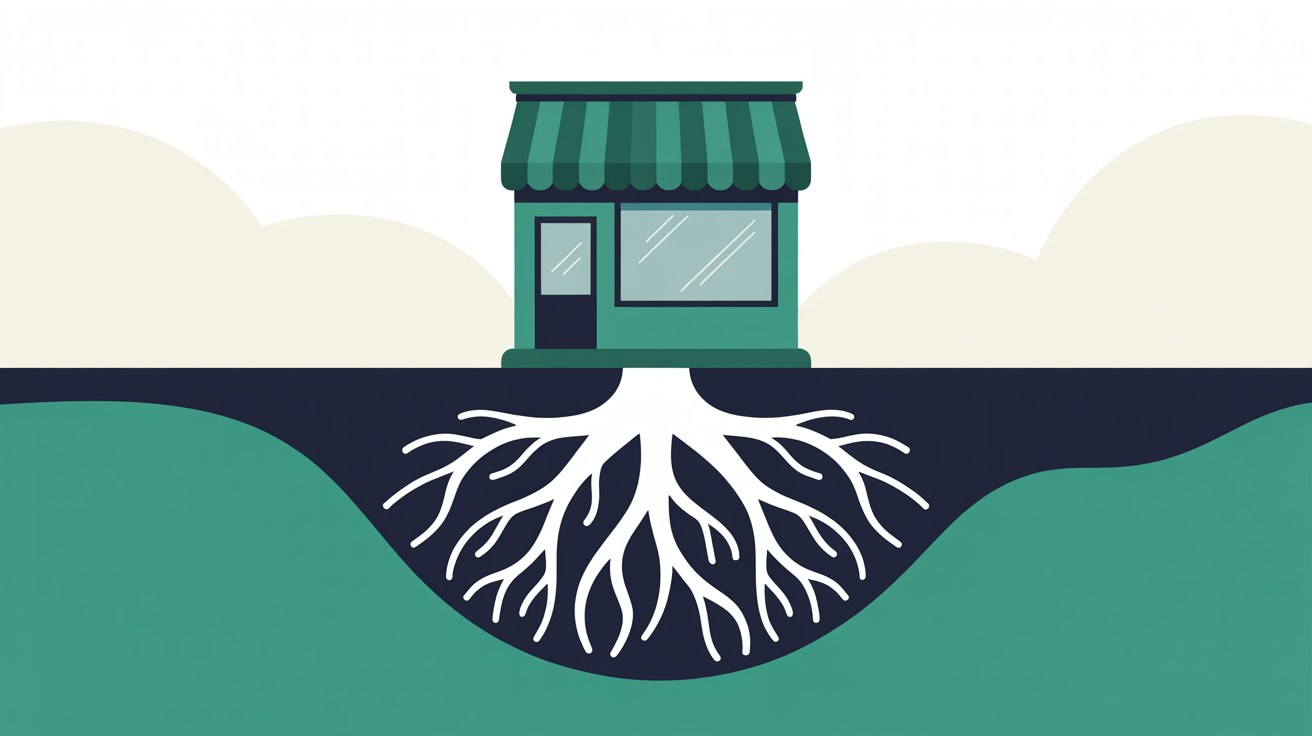
I had a maker ask me about this exact situation on a call last week, and it is the reason I wanted to write this. The marketplace was never her business. It was a shop she was renting, in a building somebody else owned, under rules somebody else could rewrite.
The Cut You Cannot See Until It Adds Up
Marketplaces feel free because there is nothing to pay up front. You list a product, it sells, and money lands in your account. What is easy to miss is how much stayed behind.
Take the biggest handmade marketplace as the example, because its fees are public. There is a listing fee of 0.20 US dollars per item. A transaction fee of 6.5 percent on the full order, including the postage your customer paid. A payment processing fee on top, which for sellers with an EU bank account runs at roughly 4 percent plus a fixed amount per order. And if you use the platform's Offsite Ads, a further 15 percent on any sale those ads bring in.
Stack those together and the platform can take well over 10 percent of a typical order before you have paid for materials, postage or your own time. Amazon's handmade programme sits in similar territory, with a flat 15 percent referral fee on the total sale price.
So what does that mean at the till? On every 100 euro of sales, somewhere between 10 and 20 euro walks out the door to the platform, every single sale, forever. That is not a launch offer. That is the deal for as long as you sell there.

None of this is hidden, to be fair. It is all in the fees policy. But it is death by a thousand cuts, and most sellers only feel the weight of it when they add up a full year and see what the commission actually came to.
Whose Customer Is It, Really?
Here is the part that hurts more than the fees. When someone buys from you on a marketplace, they are not really your customer. They are the marketplace's customer, who happened to buy your product this time.
You usually do not get their email address. You cannot add them to a mailing list. You often cannot even message them once the order is complete without breaking the platform's rules. The relationship, the single most valuable thing a small business owns, belongs to somebody else.
Think about what that costs you. A happy customer is the cheapest marketing you will ever have, but only if you can reach them again. On your own website, every buyer, every enquiry and every newsletter sign-up is yours. You can email them when a new range lands. You can offer a returning-customer discount. This is exactly why building an audience you actually own, through something as simple as an email list on your own site, changes the economics of a small business entirely.
On a marketplace, that same customer is a stranger you were introduced to once and may never be allowed to speak to again.
The Rules Can Change Between Breakfast and Lunch
The third problem is the one the Roscommon candlemaker ran into. You are playing on a pitch where the other side owns the rulebook and can rewrite it whenever it suits them.
In April 2022, the same handmade marketplace raised its transaction fee from 5 percent to 6.5 percent, a 30 percent jump. As NPR reported at the time, thousands of sellers were angry enough to stage a week-long strike, with more than 5,000 shops pledging to take part. The fee rise went ahead anyway. It is still 6.5 percent today. A strike by the very people who make the platform worth visiting did not move it an inch.
That tells you everything about where the power sits. Fees can rise. Search rankings can change and bury you. An account can be suspended over an automated flag with no human to ring. Your storefront can look completely different tomorrow, and there is nothing you can do except accept it or leave, and leaving means starting from zero somewhere else.
Here is a comparison to make the difference plain.
| What matters | Selling on a marketplace | Selling on your own website |
|---|---|---|
| Cost per sale | 10 to 20 percent commission, forever | Payment processor fee only, roughly 1.5 to 3 percent |
| Who owns the customer | The marketplace | You |
| Who sets the rules | The marketplace, and they can change | You, within the law |
| Where buyers come from | Built-in marketplace traffic | Your own marketing, SEO and repeat customers |
One honest caveat before anyone switches everything off. Moving to your own site does not magically move your existing marketplace reviews and ratings with you. Those stay on the platform. You rebuild that social proof on your own turf over time, by gathering reviews and testimonials you actually control, which is slower at first but permanent once it is done.
The One Thing a Marketplace Genuinely Does Better
I am not going to pretend marketplaces are all bad, because that would not be true, and you would rightly stop trusting the rest of this article.
Marketplaces are genuinely brilliant at one thing: putting your product in front of people who are already there to buy. That built-in traffic is real, and on day one a brand new website simply cannot match it. Nobody is searching for a shop that opened an hour ago.
So if you are just starting out and you honestly do not yet know whether anyone will buy what you make, a marketplace is the fastest, cheapest way to find out. List a few products, see what sells, learn what your customers actually want. Test there first. I will hold my hand up here: for years I told makers to start on a marketplace and sort the website out later. For most of them that was fine. For a few who took off fast, "later" arrived with a hard lesson about how much they had built on rented ground. Now I tell people to open their own shop the moment the marketplace proves the idea works.
Because the moment you have repeat buyers, the maths flips. The traffic advantage you were paying 15 percent for is now traffic you could bring back yourself, for free, if only you owned the relationship.
What Selling on Your Own Website Actually Takes
For a long time, the reason people stayed put was simple. Building your own online shop sounded hard and expensive. Hire a developer, wait weeks, pay thousands, then pay again every time you wanted to change a price. Against that, a marketplace commission looked like a bargain.
That reason is gone.
A proper own-shop setup today should do a few specific things. It should let you take card payments securely, keeping the processor's small fee instead of a fat platform commission. It should keep your customer data yours, ready for an email list and repeat sales. It should sit on hosting fast and reliable enough that a full basket does not fail at the checkout. It should include security, backups and an SSL certificate as standard, not as extras. And it should let a non-technical owner run the whole thing without ringing a developer every week.
That is the standard. Web60 was built to meet it: you describe your business, an AI builder creates a professional WordPress shop in under a minute, and everything, hosting, security, nightly backups, SSL and Irish-based support, is included for one flat price of 60 euro a year. No commission on your sales. No renewal surprise. You own the site, the customer list and the rules.
WordPress is worth mentioning here for a reason. It powers a very large share of the world's websites, and that means your shop is built on a proven, flexible platform you can grow into, not a walled garden you can be locked out of. If you already sell online and want the mechanics of it, our guide to taking payments on your own website walks through exactly how it fits together.
None of this means shutting your marketplace shop tomorrow. Plenty of Irish sellers run both, using the marketplace as a shop window and their own site as the home base where the real margin and the real relationships live. The point is simply this: make sure the business you are building sits on ground you own.
Conclusion
The candlemaker got back on her feet, eventually. She built her own site, started collecting email addresses from day one, and the following December she did something she could not do the year before: she emailed her customers to tell them the shop was open. Most of them came back.
Only around a third of small Irish enterprises sell online at all, according to the Central Statistics Office, so having any shop is already ahead of the pack. The question worth sitting with is not whether to sell online. It is who ends up owning the customers you work so hard to win. Rent the shelf if it helps you start. Just be sure to build the house while you are at it.
Frequently Asked Questions
Is it better to sell on Etsy or my own website?
For a brand new maker with no audience, a marketplace like Etsy offers built-in traffic a fresh website cannot match on day one, so it is a good place to test whether a product sells. Once you have repeat buyers, your own website is better value: you keep the marketplace commission, you own the customer list, and nobody can change your fees or bury your listings overnight.
How much does Etsy take from each sale?
Etsy charges a transaction fee of 6.5 percent of the total order including postage, a listing fee of 0.20 US dollars per item, and a payment processing fee that is around 4 percent plus a fixed amount per order for EU sellers. Optional Offsite Ads add a further 15 percent on any sale they drive. Stacked together, the platform can take well over 10 percent of a typical order before you count your own costs.
Can I move my customers off a marketplace to my own website?
Only if you have their contact details, and most marketplaces do not hand those over. That is the argument for owning your own site from the start. Every buyer, enquiry and newsletter sign-up is yours to keep and contact again, rather than a stranger the platform introduced you to once.
Do I need to be technical to run my own online shop?
No. Modern platforms let you describe your business and have a professional WordPress site with a shop built for you in under a minute, with payments, security and backups included. You manage products and orders from a simple dashboard, with no coding required.
What does it cost to run my own website shop compared with a marketplace?
A marketplace charges nothing up front but takes a percentage of every sale forever. Your own website has a small fixed annual cost and then only the payment processor's fee per transaction. For any seller doing steady volume, the fixed-cost model works out far cheaper over a year, and the savings grow the more you sell.
Sources

Eamon leads sales at Web60 and SmartHost, working directly with Irish business owners making the switch from cheap shared hosting to managed WordPress. With a background in enterprise technology sales — including Oracle and multiple Irish SaaS businesses — he understands the questions Irish SMEs ask before committing to a hosting platform. He writes about hosting comparisons, total cost of ownership, web design for Irish businesses, and how to evaluate what you’re actually buying.
More by Eamon Rheinisch →Ready to get your business online?
Describe your business. AI builds your website in 60 seconds.
Build My Website Free →More from the blog
Salon Booking App Fees vs Your Own Website: Who Pays for a New Client?
Salon booking app fees take 20% to 35% of a new client's first visit. See how Treatwell, Fresha and Booksy charge, and when your own website books for free.
Squarespace Price Increase: What to Do Before Your Renewal Date
Squarespace price increase in your renewal email? What changed in 2026, the refund rules that matter, what exports, and your options before you are charged.