

Irish SME
Your About Page Is Where Customers Decide to Trust You. Most Read Like a CV.

Your About page is the page where a stranger decides whether to do business with you. And most small business About pages read like a CV from 2007. Three paragraphs of "established in 2009" and "passionate about delivering excellence" and a stock photo of somebody smiling at a laptop.
Nobody reads that and rings you. They read it, decide you sound like everyone else, and ring whoever turns up first in Google.
I had a call yesterday with a business owner who had spent the morning rewriting her About page. She had been told it needed to be "professional", so she had cut every detail that made her sound like a real person and replaced them with vague claims about quality, dedication, and customer focus. The page was correctly punctuated, perfectly grammatical, and completely useless. Nobody would trust this woman with €400 of work after reading it. They would not even know what she actually did.
This is the About page problem. And it is one of the cheapest fixes any small business can make to a website that is not converting.
The About Page Is Not the Throwaway You Think It Is
The 2015 B2B Web Usability Report from KoMarketing and Huff Industrial Marketing found that the About page sits in the top 10 most-viewed pages for over two-thirds of business websites [1]. That report is a decade old and the pattern has not shifted. After potential customers look at what you sell, they look at who you are. They want to know if you are real. They want to know if you are competent. They want to see if there is a reason to trust you with their money or their business.
Strangers do not give their credit card to a stranger. They give it to someone they have decided is a real person, with a real business, who is going to do the work they say they will do.
The About page is where that decision happens. By the time a customer hits it, their first impression of your home page has already done its job in five seconds. The About page either confirms that impression or kills it.
According to Trustpilot's research on social proof, only around 14% of consumers trust what a brand says about itself. The other 86% need third-party validation, specific detail, or some signal that the business is what it claims to be [2]. The About page is one of the few places where you get to deliver that signal yourself, in your own words, on your own terms.
The CV Problem
Open your About page now. Read it as a stranger would. Specifically, read it as somebody who has never heard of you, has just landed on your site from a Google search, and has thirty seconds to decide whether you are worth a phone call.
Here is what most Irish small business About pages do wrong:
They lead with a date. "Established in 2009." Nobody cares when you started. They care whether you are good now.
They use the word "passionate" more than once. Or "dedicated". Or "committed to excellence". These words mean nothing because everyone says them. Your competitor says them. The competitor's competitor says them. They are the white noise of small business websites.
They write entirely in "we". We do this. We offer that. We have been providing solutions since the dawn of time. There is no "you" anywhere in the page. The customer is reading about themselves nowhere on the page they are reading to decide if you are right for them.
They hide the people. No names. No photos. No faces. Just "the team" and "our experts". A solicitor in Sligo who lists the names and qualifications of every solicitor in the practice will get more enquiries than the firm next door whose About page just says "highly experienced legal professionals". The names and faces are the trust.
They tell the reader nothing specific. Where is the business actually based? What does it actually do? What kind of customers does it actually work with? Most pages dance around all three of these because they are scared of narrowing the audience. So they speak to nobody.
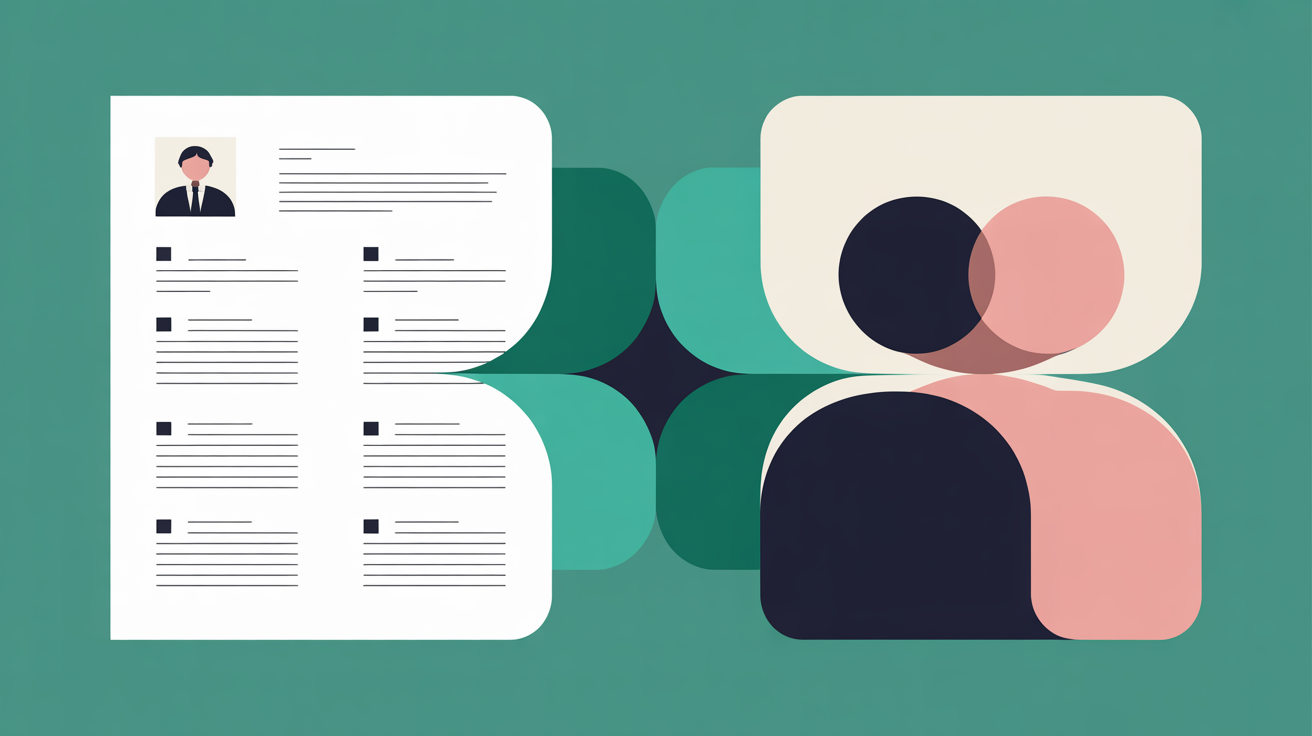
What the About Page Is Actually For
The About page is not a CV. It is a trust document. Three things it needs to do, and nothing else.
It needs to confirm you are real. Names, faces, location, contact details. A potential customer should be able to read your About page and conclude with confidence that there is an actual human at this business who will pick up the phone if something goes wrong.
It needs to establish you are competent. Not by claiming it. By showing it. What you have done. Who you have done it for. How long you have been doing it. What makes you different from the firm down the road.
It needs to feel like a person wrote it. Customers are now reading websites alongside AI tools. The About pages that feel templated, generic, and committee-written are getting filtered out. The ones that sound like a human being who actually runs a business are getting the call.
The Edelman Trust Barometer 2025 found that trust in locally headquartered brands runs roughly 15 points ahead of foreign equivalents on average across the markets surveyed [3]. That is your edge as an Irish business. You are local. You are real. You are the person the customer is going to deal with when something goes sideways. The About page is where you cash that edge in. Most owners leave it on the table.
When the About Page Genuinely Does Not Matter Much
Honest concession. If you run a craft business selling exclusively through Instagram and a Shopify shop, your website's About page probably does not move the needle very much. The buying decision happens on the social platform, the social proof is in the comments and the DMs, and the website is mostly a fulfilment endpoint. For that workload, a Shopify storefront with a one-paragraph About blurb is genuinely sufficient.
But that is not most Irish businesses. Most Irish businesses are accountants, solicitors, plumbers, dentists, consultancies, restaurants, retailers, trades. Local firms where the customer is searching, comparing, and looking for a reason to choose. For those businesses, the About page is doing more conversion work than the home page, and getting less attention than the footer.
I have made the opposite mistake myself. I once told a prospect not to bother rewriting his About page because his lead source was 90% referrals. Six months later, his referral pipeline slowed because his referrers were sending people to a website where the About page made the business look generic. The referral was sound; the website was undermining it. Lesson learned. The About page does not have to bring leads in to be costing you leads.
What to Actually Put On It
Three short sections. None of them should be longer than the customer can read in thirty seconds.
Who runs this. Names. Faces. One sentence on each person about what they actually do day to day. If it is a one-person business, that sentence is you.
What you actually do. Specifically. Not "comprehensive solutions". The thing you do, the kind of customer you do it for, and where you do it. "We do bookkeeping for tradespeople in Munster" beats "comprehensive financial services" every time.
Why anyone should believe you. Specific evidence. A line about how long you have done this work, who you have worked with, what you are qualified to do. If you have a few real client names you can mention with permission, that is gold. If not, let the specifics of your work do the talking.
That is it. A whole About page for a small Irish business probably runs to 250 words. Maybe 400 if you are stretching. Anyone who tells you it needs to be longer is selling you something.
What an About Page Cannot Do
One honest limit. An About page cannot rescue a website that has buried the contact details, hidden the prices, broken the booking form, or loads in seven seconds on mobile. The About page builds trust. It does not generate enquiries on its own. If the rest of the site is broken, the customer reads the About page, decides you are credible, and then bounces because they cannot find your phone number. The About page is one piece of the trust stack. The infrastructure underneath it has to work.
This is why the right hosting matters more than the right copy. A perfectly written About page on a site that takes seven seconds to load on a Friday lunch crowd is a perfectly written page nobody finishes reading. Web60's €60-a-year all-inclusive WordPress hosting on Irish infrastructure is the foundation that lets the trust signals do their job: fast page loads, reliable uptime, free SSL, nightly backups, and a backend you actually own and can change without ringing an agency every time you spot a typo on your About page.
A Fast Job You Have Been Putting Off
Open your About page. Read it like a stranger. Cut every sentence with the word "passionate", "dedicated", "leading", or "innovative". Cut every claim you cannot back up with a specific. Add a name. Add a face. Add a location. Add one specific thing you do for one specific kind of customer.
That is the rewrite. It takes an afternoon. It costs you nothing. Most home page redesigns will not move the needle as much. Pair the rewrite with the broader trust signals an Irish business website needs and you have closed most of the gap between a site that converts and a site that does not.
Customers are arriving on your site every day, reading the About page, deciding whether you are a real business with a real person behind it. The page is doing that work whether you have written it carefully or not. Worth knowing what version of your business it is currently telling them about.
Sources

Eamon leads sales at Web60 and SmartHost, working directly with Irish business owners making the switch from cheap shared hosting to managed WordPress. With a background in enterprise technology sales — including Oracle and multiple Irish SaaS businesses — he understands the questions Irish SMEs ask before committing to a hosting platform. He writes about hosting comparisons, total cost of ownership, web design for Irish businesses, and how to evaluate what you’re actually buying.
More by Eamon Rheinisch →Ready to get your business online?
Describe your business. AI builds your website in 60 seconds.
Build My Website Free →More from the blog
"Sold as Seen" Is Not a Defence. What Irish Law Asks of a Second-Hand Product Page
"Sold as seen" has no legal effect on an Irish consumer's rights. What the Consumer Rights Act 2022 actually asks of a second-hand product page.
The Deposit Return Scheme Rule That Lands on Your Product Page
Selling drinks online in Ireland? The deposit must be charged, shown on its own line, and carried on four documents. What the 2024 regulations require.