
Comparisons
TikTok Shop vs Your Own Website: Rent the Crowd, Own the Customer
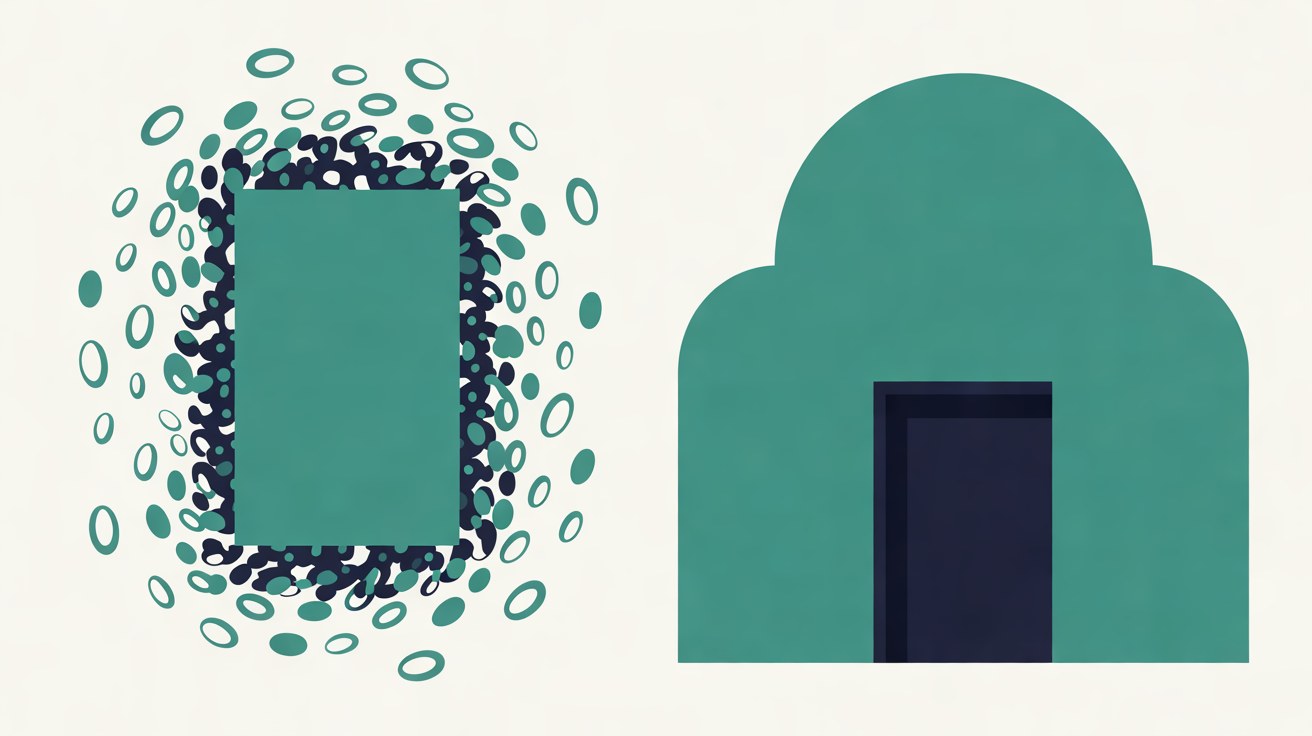
TikTok Shop is the best shop window an Irish maker has been handed in years, and a poor place to keep the shop itself. I will defend both halves of that sentence, because most of what I hear about TikTok Shop only gets one of them right.
On a call with a business owner last week, the question came up the way it does every few days now. Should I be on TikTok Shop, or should I be building my own website? Wrong question. TikTok Shop is a channel you rent. Your website is the place you own. Confuse the two and the platform's terms will teach you the difference at the worst possible moment, usually in the middle of your best week.
Why Everyone Is Suddenly Asking
TikTok Shop launched in Ireland in December 2024 as an invite-only affair. In May 2026, TikTok announced it was opening access to more Irish businesses, and said active creators had grown roughly sixfold since launch, with more than €2 million paid in commissions to Irish creators [1]. Those are TikTok's own numbers, so treat them as the view from inside the tent. The direction is not in doubt, though.
One detail in that announcement surprised me. According to NielsenIQ data that TikTok quoted, the biggest single group of TikTok Shop buyers in Ireland is aged 46 to 61, a bit over a third of shoppers, with 30 to 45 year olds close behind [1]. This is not a teenagers-only novelty. These are your customers, including the ones with money to spend.
The pull is easy to understand. A good product video can reach tens of thousands of people who have never heard of you, and they can buy without leaving the app. No brand new website can do that on day one. I will come back to that, because it is the genuine concession in this whole debate.
The Fee Changed in January, and Plenty of Sellers Missed It
From 8 January 2026, TikTok Shop's commission for sellers in Ireland went to 9% on most categories, with a reduced 7% on certain electronics, household appliances and personal care devices [2]. It had been 5%. Close to doubled, with a notice in the Seller Center.
Two details matter more than the headline rate. The 9% is quoted inclusive of VAT, which is at least honest. But TikTok calculates the commission on your net sales plus the shipping fee the customer paid [3]. So you pay commission on your postage too.
Then there is the creator commission. The whole engine of TikTok Shop is affiliates: creators who make videos of your product and earn a percentage, which you set, when their video sells it. That is a real marketing cost and often a worthwhile one. It sits on top of the platform fee, not instead of it.
Running the numbers on one sale
Take a €40 hand-knit hat with €4 postage. TikTok's 9% on €44 comes to €3.96, before any creator is paid a cent. The same sale on your own website through a card processor like Stripe, which publishes a rate of 1.5% plus €0.25 for standard European cards on its Irish pricing page, costs roughly 91 cent.
On one hat, the gap is a few euro. Across a Christmas season, it is the price of a lot of wool. And that is before the creator's slice, which on TikTok is usually the bigger number.
Fair is fair, though. Your own website does not arrive with its own crowd. You pay for traffic with time, content, or ads, and that cost is real even when it does not show up as a line on a settlement statement.
You Get Paid When TikTok Says So
Nobody mentions this one in the excited videos about going viral.
TikTok Shop's settlement policy for EU sellers, which covers Ireland, releases funds for newly onboarded sellers 31 days after the delivery date [4]. Once you are out of the beginner stage, the standard period drops to 8 days from delivery, and strong performers can reach 3 days or even 1. If TikTok is running security checks on your shop, you are back to 31 days.
Read that carefully. Thirty-one days from delivery, not from the sale. A parcel that goes out on a Monday and arrives on the Thursday releases its money more than a month after the customer tapped buy.
You know what that does to a small maker's cash flow, right? You have funded the materials, the packaging and the postage for that batch. Now you need to fund the next batch too, while the money for the last one sits in somebody else's account. A sales success can quietly turn into an overdraft conversation with your bank.
On your own site, payouts follow the schedule of the payment provider you chose, under a contract you can read and a provider you can swap. They do not depend on a platform's monthly assessment of your shop's health.

The Viral Video You Cannot Fulfil
Every TikTok seller dreams about the video that takes off. The probation rules make that dream more awkward than it looks.
New shops in the EU start in probation. A Beginner-status shop can take up to 50 orders a day. Standard status raises that to 100 orders a day across all your EU shops, Premium to 150, and only the top Pro tier removes the daily limit [5]. There are caps on how many products you can list at each stage as well.
Imagine a Mayo knitwear maker, a few weeks into TikTok Shop, whose video of an Aran-style scarf gets picked up by a creator with a big following in the first week of December. Thousands of views overnight. Hundreds of people tapping through. The shop stops taking orders at 50. The rest of those buyers do not come back tomorrow. They scroll on to the next video, which might be a competitor's.
To be fair to TikTok, the cap exists for a sensible reason: to stop a seller with no track record taking a thousand orders they cannot ship. TikTok's own guidance says probation "is not a violation or punishment" [5]. The practical effect on the maker is the same, though. The busiest weekend of the year arrives, and the ceiling is someone else's decision.
The ceiling on your own site
Your own website has no platform-imposed daily limit. The only ceilings are your stock and the hosting underneath it. That second one catches people out: a site on a bargain shared plan can slow to a crawl when a burst of visitors arrives, which is simply a different kind of cap, and one you chose without realising it.
Whose Customer Is It?
For most sellers, this is the section that should settle it.
TikTok Shop's EU Customer Service Policy, updated in May 2026 and listing Ireland among the countries it covers, prohibits sellers from diverting customers off the platform. The policy specifically bans "sending any third-party information to a Customer (e.g. third-party links, QR codes, offline store addresses or contact information)". Requesting a customer's personal information is also off limits. So is using customer information "for any purpose other than to fulfil orders placed on TikTok Shop" [6].
Sit with that for a second. The person who bought your scarf is, for marketing purposes, not your customer. No adding them to your newsletter. No message about the spring range. Not even a link to your own shop in the chat. When they want to buy again, they go back into TikTok, where the next thing on their feed might be someone else's scarf.
We have looked at this dynamic before with Etsy and Amazon, and the logic in renting a marketplace shop versus owning your own website holds here with one twist. On a marketplace, the buyer at least searched for your kind of product. On TikTok, the buyer found a video. Their loyalty attaches to the creator who made it at least as much as to you.
On your own website, a buyer's email address is held under your own privacy policy, and with proper consent you can tell them about restocks, new designs and the Christmas posting cut-off. That list is the one sales asset that compounds year after year. The usual GDPR and electronic marketing rules still apply to how you collect and use it, so get the consent wording right, but nobody else gets to decide whether you may speak to your own buyers.
Who Writes the Rules
The commission went from 5% to 9% with advance notice and no negotiation [2]. Settlement tiers are reassessed every month based on shop performance [4]. Probation progress depends on metrics like late dispatch, cancellations and negative reviews [5]. None of this is sinister. It is the deal. TikTok owns the platform, so TikTok sets the terms, and it can change them.
I have been on the wrong side of this advice myself. Years ago I told a small homewares seller that a marketplace was a safe place to build the whole business, because the fees were modest and the traffic came free. The fees moved, the traffic followed someone else's algorithm, and I would not give that advice again.
Your own website is the opposite arrangement. Prices, checkout, terms: all yours. The trade-off is that you are responsible for it running properly, which is why the platform underneath matters more than the design on top.
TikTok Shop and Your Own Website, Side by Side
| TikTok Shop (Ireland) | Your own website | |
|---|---|---|
| Cost per sale | 9% on most categories, including shipping, plus any creator commission | Card processing, around 1.5% plus 25c on standard EU cards via Stripe |
| When you get paid | 31 days after delivery for new sellers, 8 days at standard tier | On your chosen payment provider's schedule |
| Daily order limit | 50 to 150 orders a day during probation | None set by a platform |
| Customer data | Fulfilment only, no off-platform contact | Yours, under your own privacy policy |
| Who sets the rules | TikTok, with notice | You |
Where TikTok Shop Genuinely Wins
Now the concession, and I mean it. If you make something visual, demonstrable and impulse-priced, and you have no audience yet, TikTok Shop will put your product in front of more people in a week than a brand new website will reach in six months. A new site has no traffic of its own. Google takes time to trust it. That is a real limitation, and anyone who tells you a website alone solves discovery is selling you something.
For a maker testing whether a product sells at all, TikTok Shop is a fast, cheap experiment with a built-in audience. Use it for exactly that.
What it cannot be is the only place your business lives. Everything that makes TikTok brilliant for discovery (the feed, the algorithm, the creators) belongs to TikTok.
The Setup That Actually Works
Run both. Be clear about which job each one does.
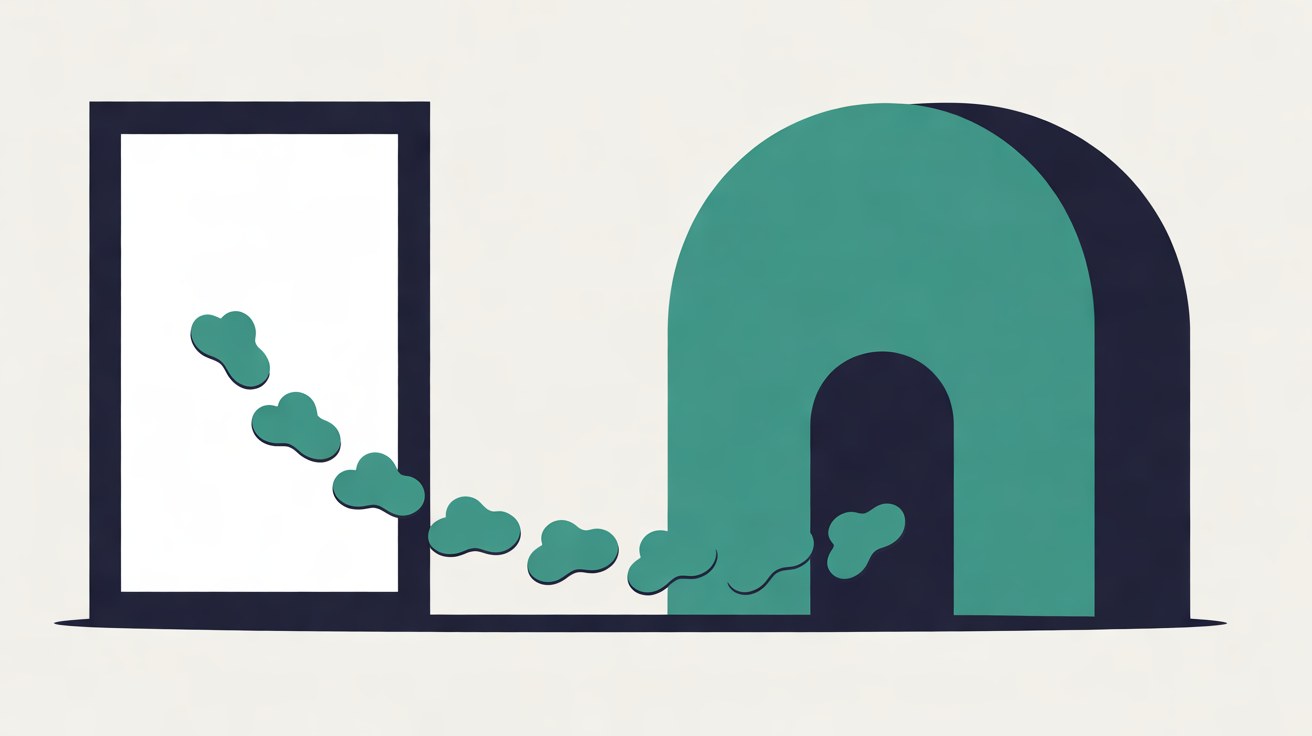
TikTok is the shop window. Your website is the shop. Your TikTok profile, your videos and your brand name should all leave people with a name they can search. When they search it on Google, your website is what they should find: the full range, your story, your delivery and returns policy, and a reason to join your list. We made the same argument about Instagram in why a social media page is not a website, and it applies with extra force when the platform actively forbids you from sending buyers anywhere else.
Three things make the website half of that work:
- Deploy a proper shop, not a brochure. WordPress runs around 40% of all websites according to W3Techs, and with WooCommerce on top you get product pages, a checkout, and customer accounts that you control.
- Verify it can take the spike. When a creator video sends a wave of people searching your name, the site has to stay quick. Server-side page caching and Redis object caching are what keep a checkout responsive when a hundred people land in the same minute, which is the difference between a sale and a buyer who gives up on your product page.
- Capture the relationship. An email sign-up with a clear reason to join, like restock alerts or a first look at new designs, turns a one-off buyer into someone you can reach without paying a platform for the privilege.
None of this needs an agency any more. The old route was a quote for €3,000 to €5,000 for an online shop, followed by hourly charges every time you wanted a product page changed. AI website builders have removed that barrier: you describe your business, a professional WordPress site is built in under a minute, and you add your own products because nobody knows them better than you. Web60's €60/year all-inclusive WordPress hosting covers the site, SSL, nightly backups, security, and the Nginx, Redis and FastCGI caching stack on Irish infrastructure, with no renewal surprise. That is less than TikTok's commission on about fifteen of those hats.
Rent the Crowd, Keep the Customer
TikTok Shop is worth your time if you treat it as advertising that happens to have a till attached. It gets risky when it becomes the whole business. The fee can move, the payout can wait a month, the daily cap can shut the door in the middle of a rush, and the buyer is never quite yours.
A website does not solve discovery for you. It does something more durable: it gives every sale, from every channel, a place to land that you control. If you already sell on TikTok, the next step is a small one. Build the site your buyers will find when they search your name, and give them a good reason to stay in touch.
Frequently Asked Questions
How much does TikTok Shop charge sellers in Ireland?
Since 8 January 2026, TikTok Shop charges a 9% commission, inclusive of VAT, on most product categories in Ireland, with a reduced 7% rate on certain electronics, appliances and personal care devices. The commission is calculated on the sale price plus the shipping fee the customer paid. If you use creator affiliates, their commission is an additional cost that you set.
Can I send TikTok Shop customers to my own website?
Not through TikTok Shop's customer channels. The EU Customer Service Policy prohibits sending customers third-party links, QR codes, offline store addresses or contact information, and prohibits using customer information for anything other than fulfilling TikTok Shop orders. The practical approach is to build brand recognition so buyers search for your name and find your website themselves.
How long does TikTok Shop take to pay sellers in Ireland?
New sellers in probation are paid 31 days after the delivery date. Sellers at the standard tier are paid 8 days after delivery, and high-performing shops can qualify for 3-day or 1-day settlement. If TikTok runs security checks on a shop, settlement can move back to 31 days.
Do I need a website if I already sell on TikTok Shop?
You do not need one to start selling, and TikTok Shop is a good way to test demand. But without a website you have no customer list of your own, no control over fees or payout timing, and nowhere for people to land when they search your business name. A website is where repeat customers come back to buy from you directly.
Sources

Eamon leads sales at Web60 and SmartHost, working directly with Irish business owners making the switch from cheap shared hosting to managed WordPress. With a background in enterprise technology sales — including Oracle and multiple Irish SaaS businesses — he understands the questions Irish SMEs ask before committing to a hosting platform. He writes about hosting comparisons, total cost of ownership, web design for Irish businesses, and how to evaluate what you’re actually buying.
More by Eamon Rheinisch →Ready to get your business online?
Describe your business. AI builds your website in 60 seconds.
Build My Website Free →More from the blog
Google Sites for Business: What the Free Builder Can and Cannot Do
Google Sites for business is free and simple, but it has no meta descriptions, no shop and no bookings. What it can do, where it stops, and what to use instead.
Viator and GetYourGuide Commission Is Rent, Not Marketing
Viator and GetYourGuide commission takes a fifth to a third of every tour booking, and the customer stays theirs. Why tour operators need their own website.